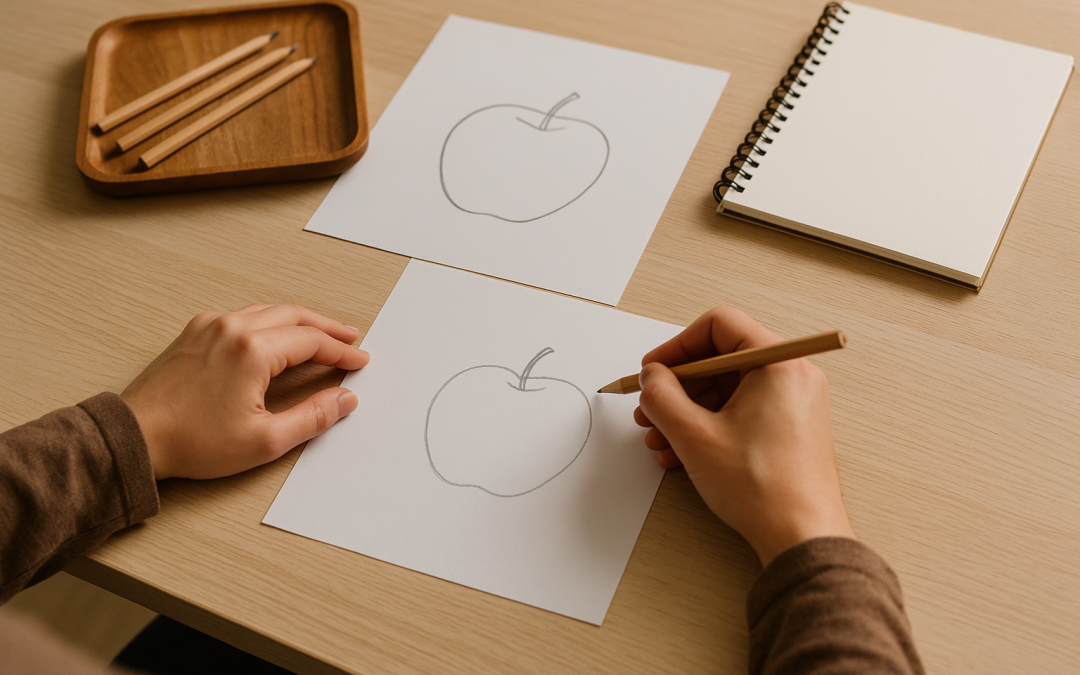
Engaging in creative activities that challenge both the mind and the hand offers a unique pathway to enhancing cognitive functions. Among these, memory drawing exercises have gained notable attention for their ability to improve memory retention, spatial awareness, and artistic skills simultaneously. This method leverages the brain’s capacity to recall and reproduce images, shapes, or scenes after a period of observation, encouraging a deeper connection between visual memory and hand coordination. Practicing these exercises regularly can serve as a powerful tool for mental sharpness and artistic development, appealing to individuals of all ages and skill levels.
At the heart of memory drawing exercises lies the principle of observation followed by reproduction from memory, which strengthens neural pathways related to recall. Initially, the participant studies a picture or an object for a predetermined amount of time, committing details to memory. After the observation phase, the image is removed, and the individual attempts to sketch or recreate what they remembered. This process demands focused attention and active engagement, both of which are critical components in improving working memory. As the brain continually processes and retrieves the stored visual information, it enhances its ability to recall details accurately over time.
One of the significant cognitive benefits of memory drawing exercises is the enhancement of spatial memory. Spatial memory allows individuals to remember the positions, shapes, and relationships between objects, which plays an essential role in navigation and problem-solving. By drawing from memory, artists strengthen their ability to encode and retrieve spatial information, resulting in more precise and confident drawings over time. This improvement extends beyond artistic pursuits, positively impacting everyday tasks such as remembering directions or locating objects in unfamiliar environments.
Moreover, memory drawing exercises contribute to improved concentration and attention to detail. The task requires careful inspection of an image or object, encouraging participants to look beyond the surface and notice subtle nuances. When the drawing phase begins, recalling those minute details ensures that the memory retains its complexity and richness, fostering better mental acuity. As this skill develops, individuals often find themselves more attentive in other areas of life, as the brain becomes accustomed to heightened focus and observation.
Another noteworthy advantage is the reduction of anxiety and stress levels through the meditative aspects of drawing. The process of memorizing and creating art from memory often induces a state of flow, where the individual loses awareness of time and external worries. This immersive experience can lead to relaxation and mental clarity, which is particularly beneficial in today’s fast-paced world. Engaging in memory drawing exercises regularly can therefore serve as a healthy coping mechanism, promoting emotional well-being alongside cognitive health.
The versatility of memory drawing exercises also makes them accessible and adaptable to various skill levels and interests. Beginners might start with simple geometric shapes or familiar objects, gradually progressing to more complex scenes or figures. Teachers and therapists frequently utilize these exercises to help children develop fine motor skills and visual perception, while professionals might employ them to maintain sharpness and creativity. The customizable nature of memory drawing ensures that it remains a rewarding and challenging activity regardless of experience.
In addition to cognitive and emotional benefits, this type of exercise nurtures artistic growth and creativity. Because drawing from memory removes reliance on direct visual reference, artists are encouraged to interpret and imagine details, which fosters originality and personal expression. This freedom helps creators move beyond replication, allowing them to develop unique styles and storytelling through their work. Over time, memory drawing exercises can nurture a more intuitive approach to art, enriching both the process and the final piece.
Technological advancements have also contributed to the popularity and effectiveness of these exercises. Digital tools and apps offer interactive platforms where users can practice memory drawing with immediate feedback, track progress, and access a wide range of images to challenge their skills. This convenience and variety help maintain motivation and engagement, making it easier to incorporate the practice into daily routines. Despite the digital options, traditional pen and paper remain powerful mediums for fostering the tactile experience that enhances memory retention.
To maximize the benefits derived from memory drawing exercises, establishing a consistent practice routine is essential. Like any cognitive skill, memory improves with repeated and deliberate effort. Starting with short, focused sessions and gradually increasing the complexity and duration allows the brain to adapt and strengthen its capabilities without feeling overwhelmed. Reflecting on each session by comparing the drawing with the original image can also help identify areas for improvement, sharpening observation and recall skills.
Different techniques within memory drawing can further enrich the experience and outcomes. For instance, combining verbal description with visual memory to narrate the scene before drawing can enhance multi-sensory engagement, boosting retention. Another approach involves incremental drawing, where one recalls and sketches only a portion of the image at a time before attempting to recreate it as a whole. Experimenting with these variations keeps the exercise fresh and pushes the boundaries of cognitive challenge, resulting in greater overall improvement.
Memory drawing exercises hold particular promise for certain groups, such as elderly individuals seeking to maintain mental agility or those recovering from neurological conditions. Research suggests that activities stimulating brain function can slow cognitive decline, making memory drawing a valuable member of therapeutic regimens. The dual focus on memory and motor skills provides a comprehensive workout for the brain, improving quality of life and fostering independence. Moreover, the intrinsic pleasure derived from creating art adds emotional fulfillment, which can be immensely empowering.
Parents and educators stand to gain significantly by integrating memory drawing into learning environments. This strategy not only nurtures artistic talents but also reinforces memory skills vital for academic success. Young learners can benefit from improved attention spans and spatial reasoning, foundations that support subjects like mathematics and reading comprehension. Encouraging children to engage in memory drawing promotes curiosity and creative thinking, helping them develop a well-rounded cognitive toolkit.
In essence, the practice of visualizing an image and committing it to paper through memory activates multiple brain regions involved in cognitive processes and creativity. This synchronization between recall, observation, and manual dexterity is what makes memory drawing exercises uniquely effective. They demand a holistic cognitive effort that sharpens memory, heightens awareness, and boosts confidence in artistic abilities. Such exercises remind us that creativity and cognitive health are deeply intertwined and can be fostered through enjoyable, accessible activities.
Exploring the world through memory drawing also opens doors to imaginative thinking and personal growth. The process encourages introspection about how the brain perceives and stores information, revealing individual strengths and areas for improvement. As one progresses, the act of reconstructing images from memory becomes a conscious collaboration between past experiences and creative vision. This synergy not only enhances mental functions but also cultivates a deeper appreciation for the intricate workings of the mind and the beauty of artistic creation.
The enduring appeal of memory drawing exercises lies in their profound simplicity and impactful results. Without the need for complex tools or extensive training, anyone can embark on this journey of mental enhancement and artistic expression. By consistently dedicating time to this practice, individuals unlock greater mental clarity, improved focus, and a richer creative life. It is an invitation to see the world through a lens of memory and imagination, transforming ordinary observation into extraordinary artistic accomplishment.
Ultimately, engaging in memory drawing exercises is more than just a leisure activity—it is a pathway to sustaining and enriching cognitive health throughout life. The blend of practice, patience, and creative exploration inherent in this approach nurtures a stronger memory, sharper senses, and a more vibrant mind. Those who embrace these exercises find themselves better equipped to meet daily challenges, connect with their inner creativity, and enjoy the enduring benefits of an active, engaged brain.