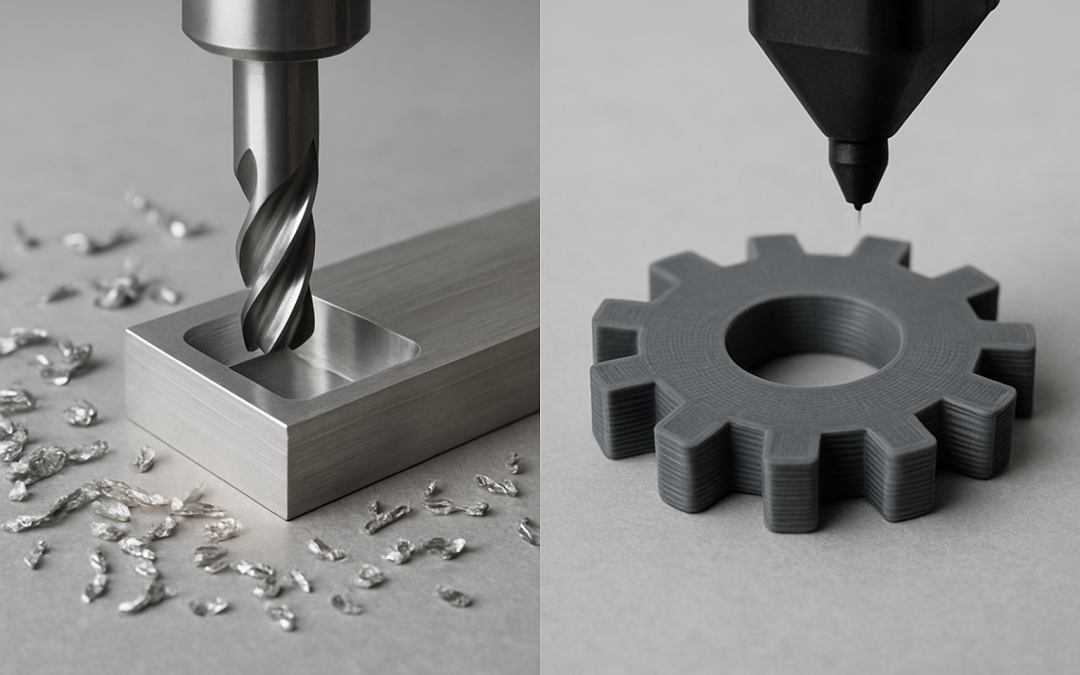
Manufacturing and fabrication techniques have evolved dramatically over the years, driven by the demand for higher efficiency, precision, and versatility. Among these methods, two primary engineering approaches stand out for creating physical objects: subtractive and additive processes. Each method is fundamentally different in how it transforms raw materials into finished products, offering unique advantages and trade-offs depending on the application and desired outcome. Understanding these processes is essential for professionals in manufacturing, design, and engineering, as the choice between them often impacts cost, time, material waste, and product complexity.
Subtractive processes involve removing material from a solid block or sheet to achieve the final shape. This approach has been used for centuries and forms the basis of traditional machining methods. Techniques such as milling, turning, drilling, and grinding fall under this category. In a typical subtractive process, the initial raw material is a larger workpiece, which is then carved, cut, or ground using various tools and machines to reveal the desired form. This method relies on precision tools and computer numerical control (CNC) systems to achieve tight tolerances and complex geometries.
The subtractive method excels in producing highly accurate parts with fine surfaces and tolerance control. Metals, plastics, and wood are commonly machined materials, with metal fabrication being particularly prevalent in industries such as aerospace, automotive, and medical devices. However, one of the challenges of subtractive manufacturing is the generation of material waste, as the removed portions typically become scrap. This can result in higher costs, especially when working with expensive or limited raw materials. Additionally, subtractive techniques have limitations when it comes to producing extremely intricate or hollow structures, requiring multiple setups or additional processes.
On the other hand, additive processes represent a relatively recent advancement and revolve around building parts by layering materials incrementally. Often referred to as 3D printing in more accessible contexts, additive manufacturing creates objects by depositing material layer upon layer according to computer-generated designs. This method allows for a broader range of geometries, including complex internal cavities, undercuts, and lattice structures that are difficult or impossible to achieve with traditional subtractive methods.
Additive manufacturing supports a wide variety of materials, including plastics, resins, metals, and even ceramics. Technologies such as selective laser sintering (SLS), fused deposition modeling (FDM), and direct metal laser sintering (DMLS) exemplify different ways of employing additive processes. A significant benefit of additive manufacturing is the near-elimination of material waste since the part is built only where material is needed. Additionally, rapid prototyping becomes more accessible, enabling designers and engineers to iterate quickly without the need for expensive tooling or molds.
Despite these benefits, additive processes often encounter limitations related to material properties and surface finish quality. The mechanical strength of additively manufactured parts can be anisotropic, meaning that strength may vary depending on the orientation of the layers. Some additive technologies also require extensive post-processing to achieve the desired surface smoothness or to remove support structures. Speed is another concern; while additive manufacturing saves time in prototyping or low-volume production, it generally cannot match the throughput of subtractive processes for large-scale manufacturing runs.
When considering the cost implications of both approaches, it becomes clear that the choice depends heavily on the production volume and part complexity. For low to medium volume production, especially when customization or intricate detailing is required, additive manufacturing can be cost-effective. It eliminates the need for tooling and molds, reducing initial investment. Conversely, for high-volume manufacturing where the production of identical parts is necessary, subtractive methods often provide better economies of scale. Once tooling is established, the per-unit cost can be significantly lower in subtractive manufacturing compared to additive.
Material selection plays a critical role in determining which process to use. Subtractive methods are versatile in handling a broader range of materials, including alloys that require specific heat treatments or finishing processes to achieve desired mechanical properties. Additive processes continue to expand in material capability, but certain high-performance materials with strict specifications are still challenging to print reliably. Moreover, some composite materials with fiber reinforcements or multilayered structures are more easily machined than additively manufactured.
The environmental impact of these two processes also warrants consideration. Subtractive processes tend to generate substantial amounts of waste material, which must be recycled or discarded, contributing to environmental footprints. However, energy consumption for machining can be relatively low when optimized. Meanwhile, additive manufacturing uses nearly all the material input, significantly reducing waste, but the energy consumption per part can be high due to prolonged machine runtimes and the use of lasers or sintering techniques.
In terms of design freedom, additive manufacturing offers unmatched versatility. Complex shapes, organic structures, and functionally graded materials become possible. This democratization of design flexibility encourages innovation across fields such as biomedical implants tailored to patient-specific anatomies, aerodynamic parts with optimized internal channels, or architectural models with intricate details. Subtractive manufacturing, while less freeform, continues to be essential for parts requiring strict dimensional accuracy and surface quality that current additive technologies struggle to achieve.
Hybrid manufacturing approaches are emerging, combining the best features of both subtractive and additive processes to overcome individual limitations. For example, a part may first be built using additive manufacturing and then machined to achieve critical surface tolerances or finish. This combination allows for intricate geometries to be produced alongside refined features, optimizing both material usage and quality. Such hybrid methods are particularly valuable in industries where performance and complexity go hand in hand, like aerospace, defense, and medical device manufacturing.
Another dimension to consider is the impact on the supply chain and production agility. Additive manufacturing can decentralize manufacturing by enabling localized production, reducing reliance on traditional manufacturing facilities and long shipping routes. This flexibility is vital in scenarios requiring rapid response to demand shifts, such as during product development cycles or in emergency situations. Subtractive manufacturing typically requires larger, specialized equipment and infrastructure, leading to fixed production sites and longer lead times for tooling preparation.
The workforce skill sets required for each process also vary. Subtractive manufacturing demands expertise in machine operation, tooling selection, and programming CNC machinery. Precision in setup and maintenance is critical to avoid costly errors and equipment damage. Additive manufacturing calls for proficiency in digital modeling, slicing software, and understanding material behaviors during the layer-by-layer build process. Post-processing skills are essential across both to achieve finished, usable parts.
As technology advances, the lines between subtractive and additive manufacturing continue to blur. Developments in additive technology focus on improving the speed, surface finish, and mechanical properties of printed parts, aiming to challenge traditional machining’s dominance. Simultaneously, subtractive methods see enhancements in automation, multi-axis machining, and precision measurement, ensuring that subtractive manufacturing remains relevant and competitive.
In conclusion, the choice between subtractive and additive processes hinges on a comprehensive evaluation of specific project requirements, including design complexity, material properties, production volume, and cost constraints. Subtractive manufacturing offers unparalleled precision and surface quality for producing parts from solid blocks, while additive manufacturing revolutionizes design freedom and material efficiency by building parts layer by layer. The future of manufacturing will likely involve a synergistic blend of both, leveraging their unique strengths to meet the growing demands of innovation, sustainability, and customization. Understanding these processes deeply empowers manufacturers and designers to make informed decisions, driving progress across industries.