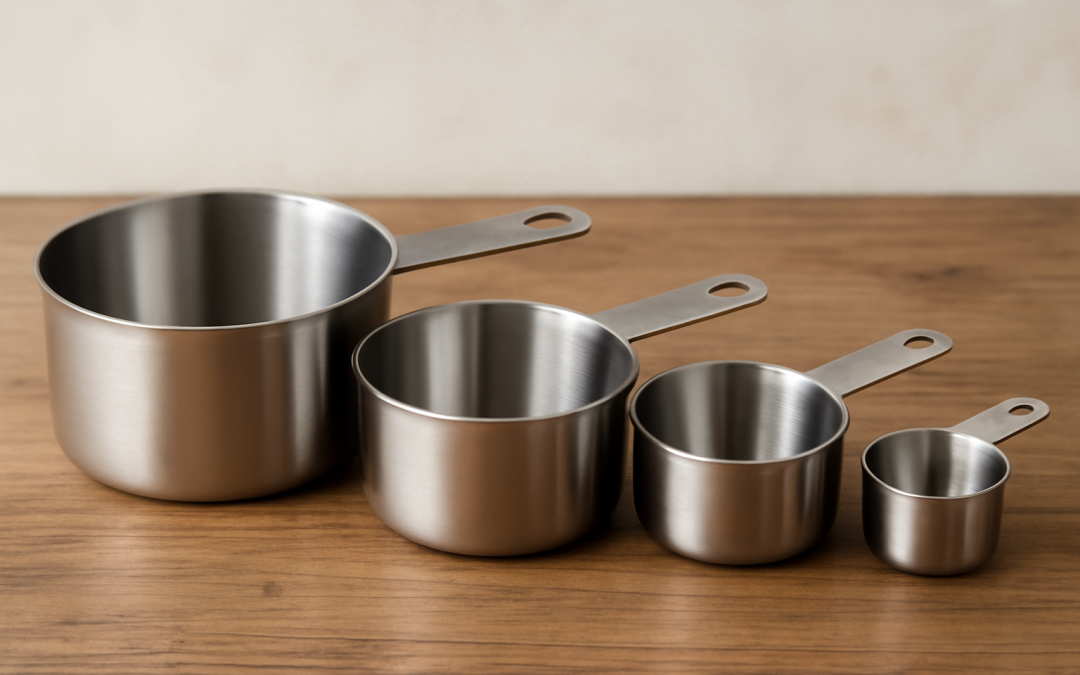
In kitchens across the world, from humble home setups to professional culinary establishments, the importance of precise measurements cannot be overstated. Accurate measuring tools are essential in ensuring the consistency and success of recipes, whether baking a delicate pastry or preparing a complex sauce. Among these essential tools, measuring cups hold a place of particular significance due to their role in providing standardized, quantifiable amounts of ingredients. The relationship between measuring cups and standardization in cooking reflects broader themes of accuracy, reliability, and the transferability of recipes, which are crucial to both everyday cooking and the scientific approach to food preparation.
Historically, the standardization of measurements was linked closely to the varying traditions and regional differences in how ingredients were quantified. Before the advent of common measuring utensils, cooks relied heavily on estimations like “a handful” or “a pinch,” leading to inconsistent results and an unpredictable culinary experience. This variability was especially problematic in baking, where the precise ratio of flour, sugar, and liquid can drastically alter the texture and taste. The development of measuring cups revolutionized cooking by introducing a tangible, reproducible method of measurement that became a foundation for recipes worldwide.
Measuring cups are typically standardized to defined volumes, most commonly in units such as cups, milliliters, or fluid ounces. These standards enable users to follow recipes with confidence, knowing that when a recipe calls for one cup of an ingredient, it will be the same quantity whether you are in the United States, Europe, or Asia—assuming uniform standards are applied. This is essential not only for home cooking but also for commercial food production, where consistency across batches can affect both quality and safety.
The primary goal of measuring cups is to provide a simple and efficient way to measure both liquid and dry ingredients accurately. However, not all measuring cups are created equal. Differences in design, material, and markings can influence how straightforward and precise the measuring process is. Liquid measuring cups typically feature a spout and graduated markings to allow for visual measurement of fluid quantities without the need to level off the ingredient. Dry measuring cups, on the other hand, are designed to be filled to the brim and leveled off to ensure exact amounts. This distinction highlights the importance of understanding the appropriate use of measurement tools to guarantee recipe success.
Standardization in measuring practices goes beyond the physical tools and extends into how volume units are defined and regulated. For instance, the metric system uses liters and milliliters as universal units of volume measurement, facilitating international consistency. In contrast, the United States primarily employs the customary cup measurement, which does not align perfectly with the metric cup. One US cup equals approximately 237 milliliters, while the metric cup is defined as 250 milliliters. This discrepancy can lead to differences in recipes and highlights the ongoing challenge of harmonizing cooking measurements across diverse systems.
To address these variations, organizations such as the International Organization for Standardization (ISO) and national metrology institutes have worked to codify the definitions of volume measurements. These efforts are especially critical in professional culinary environments and food manufacturing, where precision can directly impact product quality, regulatory compliance, and even consumer trust. Standardization of measuring cups encompasses ensuring that manufacturers produce a cup that accurately represents the defined volume and that consumers understand how to properly use these tools.
The impact of standardized measuring cups is significant when it comes to recipe reproducibility. In scientific cooking, where research and experimentation are increasingly applied to culinary arts, the exact measurement of ingredients is paramount. Standardized measurement tools remove ambiguity, allowing chefs and food scientists to record procedures with the confidence that others can replicate them with similar outcomes. This has direct implications for recipe testing, product development, and culinary education.
In addition to individual culinary applications, measuring cups with standardized volumes play a vital role in nutrition and dietary control. Many diet plans and food guidelines emphasize portion control, and accurate measurements are necessary to calculate precise nutrient intake. Whether it’s measuring a cup of rice or a cup of broth, standardized measuring cups help maintain consistency in dietary tracking. This practice supports public health initiatives and personal goals alike, reinforcing the importance of accuracy in everyday food preparation.
Another important aspect of measuring cups and standardization is the consideration of ingredient density and packing. For dry ingredients, such as flour and sugar, how they are packed into a measuring cup can alter the quantity significantly. For example, sifted flour will occupy more volume but weigh less than packed flour. Standardized measuring cups provide a starting point, but professional bakers often weigh ingredients for ultimate precision. Nevertheless, for most cooking purposes, standardized measuring cups remain the go-to tool due to their practical convenience.
Furthermore, the materials used to manufacture measuring cups can influence both the experience and durability of these tools. Common materials include plastic, glass, and stainless steel, each with advantages and disadvantages. Plastic cups are lightweight and inexpensive but can warp or stain over time. Glass measuring cups typically offer transparency and heat resistance, allowing for easy monitoring of liquid levels and use in microwaves. Stainless steel measuring cups provide durability and resistance to staining but lack transparency, which can make liquid measurement less intuitive.
The historical evolution of measuring cups also reflects broader trends in standardization and consumer demand. Early measuring devices were often crafted from wood or ceramics, with little uniformity. With the industrial revolution and advances in manufacturing, it became possible to mass-produce measuring cups with precise dimensions and volume markings. This democratization of accurate measurement tools allowed for more widespread adoption of standardized recipes and improved cooking outcomes worldwide.
Technology has also influenced the evolution of measuring instruments in the kitchen. Digital scales have gained prominence, particularly in professional and experimental cooking contexts, as they offer unparalleled accuracy by weight rather than volume. However, measuring cups remain indispensable for everyday use due to their simplicity, speed, and ease of cleaning. They continue to be complemented by other standardized tools, but their role as fundamental measuring instruments remains steadfast.
In addition, educational resources have adapted to highlight the importance of understanding standard measurements. Cookbooks and culinary schools emphasize the proper use of measuring cups as an essential skill, reinforcing good cooking habits and reducing the likelihood of errors. Likewise, innovations in measuring cup design, such as adjustable or collapsible measuring cups, have sought to improve user experience while maintaining standardization.
While measuring cups are vital in many culinary scenarios, their accuracy can sometimes be affected by user technique. For instance, improper leveling of dry ingredients or eye-level reading of liquid measurements can introduce errors. Therefore, standardized measuring cups are often accompanied by instructions or guidelines that promote best practices. This educational aspect helps to maintain the integrity of measurement standards and supports consistent cooking results.
Moreover, standardization of measuring cups contributes significantly to cross-cultural culinary exchanges. As recipes travel globally, having a universally understood measurement system helps bridge the gap between different cooking traditions. This fosters both innovation and the preservation of culinary heritage, allowing enthusiasts and professionals alike to explore and recreate dishes with fidelity to original proportions.
Ultimately, the practice of careful measurement in cooking underscores a critical balance between art and science. While creativity and intuition are important, the use of standardized measuring cups ensures a reliable foundation upon which culinary innovation can thrive. This blend of precision and expression enhances the culinary experience for cooks and diners alike.
As kitchens become increasingly sophisticated, the demand for standardized and accurate measurement tools continues to rise. From home cooks seeking consistent results to large-scale food manufacturers needing to meet regulatory standards and consumer expectations, measuring cups remain a central instrument. Their design, production, and consumption illuminate the broader narrative of standardization as an enabler of quality, trust, and efficiency in the culinary world.
In conclusion, measuring cups are far more than simple kitchen utensils; they are integral to the pursuit of consistency and precision in cooking. Through their standardized volumes and design, they provide a universal language for ingredients that transcends borders and culinary styles. This standardization fosters reproducibility, supports nutritional goals, and enhances the overall reliability of recipes. As tools that bridge the art of cooking with scientific exactness, measuring cups continue to shape culinary practices worldwide, underscoring the enduring value of measurement and standardization in the gastronomic arts.