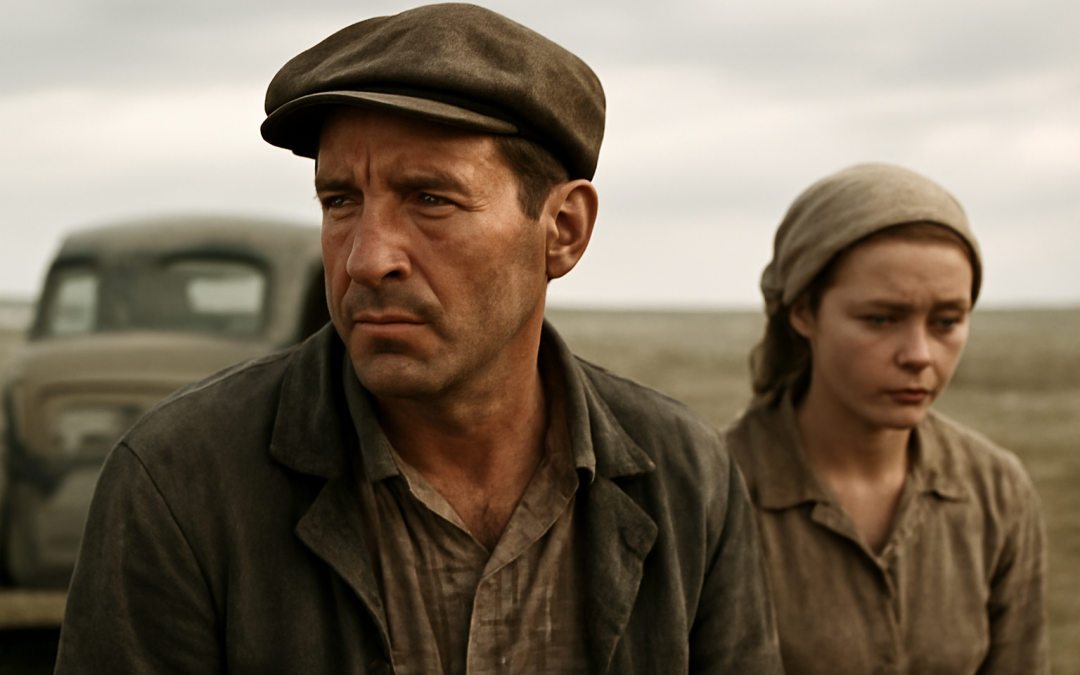
John Steinbeck’s *The Grapes of Wrath* stands as one of the most powerful and poignant explorations of human endurance in the face of overwhelming adversity. Set against the turbulent backdrop of the Great Depression, the novel captures the physical and emotional toll on thousands of American families displaced by economic collapse and environmental disaster. Steinbeck’s masterful narrative delves beyond mere reportage of hardship to expose the resilience of the human spirit, the capacity for compassion, and the complex interplay between despair and hope. The story’s vivid portrayal of the Joad family’s migration from Oklahoma to California serves not only as an indictment of social injustice but also as a timeless testament to the enduring strength of community and humanity.
At its core, *The Grapes of Wrath* confronts the brutal realities of poverty and dislocation. The Joad family, like many others, is driven from their land by drought and economic forces beyond their control. Their journey westward is a desperate quest for survival and a better life, filled with hardship at every turn. Steinbeck’s description of this trek is unflinching; the dust bowl conditions that destroyed the farmland of the Midwest are rendered with primal force, symbolizing both the literal and metaphorical desolation faced by the characters. Yet amidst the relentless depiction of suffering, there is an underlying current of determination and solidarity, suggesting the possibility of renewal even in the bleakest circumstances.
Steinbeck’s ability to humanize a vast social issue through the intimate lens of one family’s experience is a central strength of the novel. The characters are drawn with profound empathy, each grappling with their own fears, hopes, and doubts as they confront an uncertain future. Tom Joad, the novel’s protagonist, embodies both the anger and yearning that define the human condition under oppression. His transformation from a resigned ex-convict to a leader willing to fight for justice mirrors the broader awakening of disenfranchised masses seeking dignity and fairness. Similarly, Ma Joad’s unwavering resolve and nurturing presence anchor the family, serving as a symbol of endurance and moral fortitude.
The novel’s narrative is further enriched by Steinbeck’s vivid social commentary. He skillfully exposes the systemic exploitation faced by migrant workers, whose labor fuels the economy but whose humanity is routinely neglected. The dehumanizing conditions in the roadside camps and fruit-picking fields highlight the cruelty of unchecked capitalism and institutional neglect. Steinbeck’s exploration of class conflict is not didactic; instead, it invites readers to witness the pain and injustice firsthand, fostering empathy and a call for change. Through this, *The Grapes of Wrath* becomes more than just a story of individual hardship—it becomes a rallying cry for social awareness and reform.
What distinguishes *The Grapes of Wrath* from other works of social realism is its philosophical nuance and poetic depth. The novel’s intercalary chapters offer sweeping reflections on human nature, the environment, and collective struggle. These passages elevate the story from mere narrative to a meditation on existence itself. Steinbeck suggests that despite suffering, there is an inherent dignity in human connection and shared experience. The title itself evokes both biblical and agrarian imagery, hinting at divine judgment as well as the literal “wrath” borne of the crushed labor of the earth. Through this interplay of symbolism and story, Steinbeck crafts a work that resonates on multiple levels, inviting readers to reflect on broader questions of justice, morality, and survival.
The depiction of the journey west is particularly striking, capturing a migration that reshaped not just the geography of the United States but the social fabric of the nation. Steinbeck presents the roads as lifelines, fraught with danger but also brimming with unexpected moments of kindness and solidarity. The family’s encounters with others on similar paths underscore a shared struggle, transforming individual suffering into collective endurance. This portrayal highlights the importance of community in sustaining hope, an idea that continues to feel relevant in today’s era of displacement and economic uncertainty.
Steinbeck’s prose is both accessible and richly evocative, a testament to his skill as a storyteller. His vivid descriptions of the land, the camps, and the people breathe life into the hardships, embedding the reader within the narrative world. The emotional intensity of the novel is heightened by moments of quiet intimacy—the small gestures of care between family members, the flashes of humor amid despair, and the profound moments of loss and resilience. This blend of realism and lyricism ensures that the story remains deeply affecting, transcending its historical moment to speak to universal themes of hardship and humanity.
One of the most compelling aspects of the narrative is its exploration of justice on both personal and societal levels. Tom Joad’s encounters with violence and oppression highlight the raw struggle for survival in a cold, indifferent world. Yet, the novel also suggests that justice is not merely a legal or political concept but a moral imperative that arises from shared empathy and mutual aid. The closing chapters, marked by acts of selflessness and sacrifice, reinforce the idea that human beings are bound together by an ethical responsibility to one another. This vision of interconnectedness serves as a powerful counterpoint to the individualistic ideology that often underpins economic hardship.
The character development throughout the novel is intricate and multidimensional. Each member of the Joad family reflects different facets of the human response to crisis. Ma Joad is the emotional and spiritual center, her strength providing hope and stability. Pa Joad represents traditional values and pride, struggling to reconcile his fading authority with the realities of their new life. Ruthie and the younger children embody innocence lost and the promise of future generations. Through these characters, Steinbeck presents a microcosm of society, underscoring the importance of family as both a source of identity and a mode of survival.
The novel’s enduring legacy is also tied to its broader cultural and historical significance. Published during a time of nationwide despair, it gave voice to the voiceless and challenged dominant narratives about success and failure. Steinbeck’s candid portrayal of poverty and suffering was met with controversy but ultimately helped to shape public discourse about the plight of migrant workers. The themes of displacement, resilience, and social justice remain deeply relevant, reflecting ongoing struggles faced by marginalized communities around the world.
Moreover, *The Grapes of Wrath* serves as an important educational tool, prompting critical examination of American history and the consequences of economic and environmental crises. Its vivid depiction of the dust bowl and the Great Depression anchors abstract history in human experience, making it accessible and compelling for readers of all ages. The novel’s blend of factual detail with profound emotional insight creates a narrative that is both informative and deeply moving, ensuring its place in the canon of American literature.
Despite its heavy themes, the novel is not without moments of hope and humanity. Steinbeck carefully balances the depiction of suffering with instances of kindness and communal strength. The camaraderie among the dispossessed, the acts of generosity despite scarcity, and the enduring hope for a better future provide a counterweight to the harsh realities faced by the Joads. This balance prevents the novel from descending into despair, instead offering a vision of resilience that is both realistic and inspiring.
In examining the symbolism throughout the book, much attention is drawn to the significance of the land and the natural world. The earth is both a source of sustenance and destruction, reflecting the dual nature of human existence. Steinbeck’s portrayal of the land contrasts with the mechanized forces that displace the farmers, representing the tension between tradition and modernity. The land, in many ways, becomes a character itself—capricious, nurturing, and relentless—mirroring the struggles and hopes of the people bound to it.
*The Grapes of Wrath* also raises important ethical questions about leadership and responsibility. Tom Joad’s evolution into a figure who recognizes the power of collective action speaks to the broader themes of justice and social change. His willingness to stand up against oppression symbolizes a call to action that transcends the novel’s historical moment. The portrayal of leadership here is nuanced, emphasizing service and sacrifice over power and control, offering a model for social engagement in times of crisis.
The novel’s pacing and structure contribute significantly to its emotional impact. The alternating chapters between the Joad family’s personal narrative and the broader social context create a tapestry that is both personal and epic. This technique allows Steinbeck to situate individual suffering within a communal and historical framework, deepening the reader’s understanding of the forces at play. The rhythm of the story builds tension and empathy, drawing the reader into the lived realities of those displaced by circumstance.
The universality of the themes in *The Grapes of Wrath* ensures its continued relevance. Issues such as displacement, economic inequality, environmental degradation, and the search for dignity resonate across time and geography. Steinbeck’s exploration of human resilience in the face of injustice speaks to a fundamental aspect of the human experience, inspiring empathy and reflection in readers from disparate backgrounds. This broad applicability underscores why the novel remains a landmark in both literature and social commentary.
In conclusion, *The Grapes of Wrath* is a profound meditation on hardship and humanity that transcends its period setting to speak to enduring truths about the human condition. Steinbeck’s rich characterizations, unflinching social critique, and poetic symbolism combine to create a narrative that is as moving as it is illuminating. The novel’s exploration of suffering, community, justice, and hope offers a powerful reminder of the resilience and interconnectedness that define us. It challenges readers not only to witness the struggles of the past but also to consider their roles in the human story today, making it an essential work for understanding both history and the enduring quest for dignity amidst adversity.