
by admin | Jul 25, 2026 | Reviews
Few stories in recent memory intertwine the human spirit, spirituality, and the art of storytelling as profoundly as this narrative. From its initial moments, it invites readers and viewers alike into a world where faith is not just a belief system but a vital force that sustains the protagonist through unimaginable trials. The layers of narrative complexity are vast, weaving philosophical musings with the visceral reality of survival, creating a rich tapestry that challenges, comforts, and compels.
The protagonist’s journey is both literal and metaphorical, charting a course across the vast ocean as well as through the realms of doubt, hope, and belief. Central to the narrative is the exploration of faith—not merely as religious adherence but as a survival mechanism that transcends conventional understanding. The story asks profound questions about the nature of reality and the power of storytelling itself, suggesting that sometimes the narratives we choose to believe are what ultimately define us.
At the heart of the story lies an extraordinary circumstance: a young person stranded in the vastness of the Pacific Ocean, accompanied only by a Bengal tiger. This unlikely companionship becomes a crucible for exploring the coexistence of fear, courage, and faith. Their relationship shifts from one of mutual wariness to a complex bond of trust and interdependence, symbolizing broader themes about humanity’s relationship with nature and the divine.
Narratively, the story is rich with symbolism. Water, often a metaphor for life’s constant flux and uncertainty, serves as both a barrier and a bridge between worlds. The ocean’s vastness reflects the limitless possibilities of the human spirit and imagination, while also highlighting our vulnerability. The tiger, named Richard Parker, is not merely an animal but a manifestation of the primal forces within the human psyche, embodying both danger and protection.
The presentation of multiple faiths is another remarkable aspect. The protagonist expresses devotion to Hinduism, Christianity, and Islam, illustrating a pluralistic spiritual consciousness rarely explored with such intimacy in mainstream storytelling. This depiction reinforces the idea that faith transcends rigid boundaries, and spirituality can be a deeply personal, evolving process. His eclectic religious practices serve as a poignant reminder that the search for meaning often cuts across organized doctrines, resonating with audiences from different backgrounds.
More than just a survival story, it becomes a meditation on the ways we construct our realities. When the protagonist offers two versions of his ordeal—one fantastical, the other starkly realistic—he challenges the listener, and by extension the audience, to contemplate the nature of truth. This narrative choice invites us to question what we prefer to believe and why. Is faith merely a comforting illusion, or does it possess a transformative power that gives life meaning beyond mere facts?
That tension between belief and skepticism is woven throughout, resonating deeply with anyone who has grappled with uncertainty in their own lives. It elevates the narrative from a simple tale of adventure into a philosophical inquiry about the stories we tell ourselves. In essence, the story becomes an allegory for human resilience: our capacity to adapt, to hope, and to find sanctuary within the stories that shape us.
The author’s use of language and vivid descriptions further enhances this exploration. Imagery is not just decorative but integral to the emotional landscape, evoking the beauty and terror of the natural world with equal intensity. The graphic descriptions of the ocean’s moods mirror the shifting emotional tides within the protagonist, creating a sensory experience that immerses the reader or viewer completely.
Equally compelling is the film adaptation’s visual grandeur, which brings these themes to life with breathtaking cinematography. The interplay of light and shadow on the water, the vastness of the sky, and the meticulous details of the lifeboat create a world that is both wondrous and unforgiving. The tiger’s majestic and sometimes terrifying presence is rendered with such realism that it elicits genuine awe and fear, underscoring the precariousness of the protagonist’s situation.
The soundtrack also plays a crucial role in framing the emotional tone. Ethereal music swells at moments of revelation, underscoring the spiritual quest inherent in the story. Silence, on the other hand, punctuates scenes of isolation and introspection, allowing the weight of solitude and uncertainty to linger palpably. This interplay of sound and silence deepens the audience’s connection to the themes of faith and storytelling.
While the narrative’s fantastical elements invite wonder, its psychological depth is what truly captivates. The loneliness and isolation that the protagonist endures catalyze profound introspection. His conversations with the tiger symbolize a dialogue with the self—between rationality and instinct, fear and hope. This internal struggle is a mirror for the universal human conflict between doubt and belief.
The story’s conclusion, deliberately ambiguous, leaves the audience with more questions than answers—a rarity in contemporary storytelling. This openness encourages ongoing reflection rather than offering neat resolutions. The choice to leave the truth of the tale uncertain emphasizes the power of narrative as a tool to shape perception and understanding, rather than a simple vehicle for fact.
Critically, this narrative defies easy categorization. It is part adventure, part spiritual parable, and part psychological thriller. The skillful blending of genres broadens its appeal and enriches its thematic complexity. Viewers and readers find themselves drawn into a story that is as much about the power of imagination and faith as it is about physical survival.
The protagonist’s resourcefulness and resilience underscore the human capacity to endure extreme hardship. His creative solutions to challenges—whether constructing shelter, rationing food, or managing his relationship with Richard Parker—highlight the interplay between ingenuity and hope. This pragmatic side of the story balances the more ethereal spiritual themes, grounding the narrative in lived experience.
In exploring the framework of storytelling itself, the narrative aligns with a long tradition of meta-fiction—stories about stories. By inviting the audience to consider the nature of narrative truth, it positions itself as a commentary on the human need to impose order on chaos through tales. This reflexive quality adds a layer of intellectual engagement that elevates the work beyond mere survival drama.
Language and storytelling also become acts of preservation throughout the tale. The protagonist’s retelling of his ordeal is an assertion of identity and a way to make sense of trauma. Through story, pain becomes coherent, and isolation is transformed into connection. The act of narration itself embodies the hope that meaning can be derived from suffering.
Underlying the narrative is a profound affirmation of the human spirit’s indefatigability and its craving for connection—to nature, to the divine, and to each other. The story acknowledges the darkness that life can bring but insists on the light that can emerge through faith and imagination. It suggests that belief, whatever form it takes, is a fundamental human need that sustains us in moments when all else is lost.
This work also invites reflection on the role of nature in spiritual experience. The vast, often threatening ocean serves as both antagonist and teacher, demanding respect and offering revelation in equal measure. The interactions between man and beast highlight the blurred lines between civilization and wilderness, reason and instinct, safety and danger.
The interweaving of narrative layers—fact, fiction, myth, and reality—creates a mosaic that mirrors the complexity of human consciousness. This blending challenges the audience to reconsider assumptions about truth and the function of narrative as a tool for survival. It demonstrates that the lines between reality and imagination are not always clear-cut but often exist in a dynamic tension.
In many ways, the story is a modern fable, drawing on centuries-old motifs while updating them for a contemporary audience. It taps into archetypal themes of journey, trial, and transformation. At the same time, it captures the unique challenges and sensibilities of the modern world, particularly the search for meaning in an age of uncertainty.
The narrative’s treatment of childhood and innocence adds another dimension. The protagonist’s youth amplifies the sense of vulnerability and wonder, making his ordeal all the more poignant. His evolving understanding of faith and storytelling reflects the transition from innocence to experience, highlighting the growth that can arise from suffering.
Moreover, the story’s multicultural context enriches its texture. The protagonist’s Indian heritage, his migration, and the global elements of the tale speak to the interconnectedness of human experience. This blending of cultural perspectives challenges parochial views and offers a more inclusive vision of spirituality and resilience.
From a critical perspective, the story can also be seen as a meditation on the power dynamics between humans and nature. The delicate and sometimes antagonistic relationship between the boy and the tiger evokes questions about dominance, coexistence, and respect. It raises awareness of humanity’s often fraught place within the natural order.
The narrative’s philosophical underpinning resonates with existential and spiritual traditions alike. The themes of isolation, suffering, and the search for meaning echo the works of thinkers who have grappled with the human condition. By situating a personal story within this broader context, the tale achieves a universality that speaks across cultures and epochs.
Finally, the work’s lasting impact lies in its insistence that stories themselves are acts of faith. To tell a story is to assert that one’s experience matters, that the world can be made comprehensible, and that hope can emerge from despair. This conviction infuses every page and frame, leaving a profound impression on those who engage with it fully.

by admin | Jul 24, 2026 | Reviews
In a literary landscape often dominated by sprawling epics and complex narratives, a story distilled to its bare essentials can have an extraordinary impact. This particular work unfolds in a world stripped to its bleakest elements, where survival hinges on adaptability, resilience, and the tenuous bond between two characters grappling with an uncertain future. The narrative’s austere prose mirrors the setting’s desolation, creating an immersive experience that challenges readers to confront the fundamental aspects of human existence.
At its core, the story chronicles a journey not merely through a ravaged physical landscape but also through the internal wilderness of hope and despair. The protagonists, a father and his young son, traverse a hostile environment in search of safety, carrying with them little more than a fragile thread of survival instinct. The sparse dialogues between them capture the profound emotional stakes and unspoken fears that fuel their perseverance. Their interactions serve as a beacon of humanity amid relentless calamity, reminding readers of the enduring power of familial love in the bleakest circumstances.
The author’s use of survival in prose manifests through a minimalist style that both underlines the narrative’s urgency and reinforces its thematic message. Sentences are stripped of excess, favoring simplicity over ornamentation. This economy of language is not a limitation but a deliberate choice that evokes the starkness of the world the characters inhabit. Every word is weighted with meaning, and silence between lines often conveys as much emotional depth as the written text itself. This stylistic restraint shapes a reading experience that is both raw and intimate.
Underlying the harshness of the external environment is a haunting exploration of morality in extremis. The story raises profound questions about what it means to remain human when society’s structures collapse. The father’s internal struggle—between protecting his son and the brutal choices survival demands—forces readers to confront uncomfortable ethical dilemmas. This moral ambiguity eschews clear-cut heroism or villainy, instead depicting survival as a complex, often painful process marked by compromise and sacrifice.
The narrative pacing mirrors the gradual erosion of safety and certainty in the protagonists’ journey. Moments of quiet reflection alternate with brief bursts of tension, encapsulating the unpredictable nature of their world. This rhythm keeps readers alert to the fragile balance between hope and despair and intensifies the sense of vulnerability that pervades the story. Each step forward is fraught with peril, and the omnipresent threat of violence or deprivation looms just beyond the horizon.
Beyond the immediate survival plot, the story is also a meditation on memory and legacy. The father’s storytelling and occasional recollections serve as a tether to a past that is both distant and precious. These fragments of memory not only deepen the characters’ backstories but also highlight the role of narrative itself as a form of survival. Through preserving stories, identity and humanity persist even when everything else is threatened by oblivion.
Another notable aspect is the subtle yet powerful use of setting as a character in its own right. The devastated landscape is rendered with sparse but telling details: ashen skies, barren trees, the cold bite of winter air. These elements are never merely background; they shape the story’s mood and influence every decision the characters make. The environment challenges the endurance of the human spirit and emphasizes the isolation and desolation that underlie the narrative.
Thematically, the story extends beyond mere survival to touch on hope, trust, and the complexities of human connection. Despite the bleakness, small acts of kindness and moments of vulnerability reveal an underlying current of humanity that refuses to be extinguished. The relationship between father and son embodies this tension—between the need to protect and the fear of an uncertain future. Their bond is a lifeline, underscoring the idea that survival is not just a physical act but an emotional and psychological endeavor.
Integral to the work’s compelling nature is its accessible yet profound language. The prose invites readers of varying literary backgrounds to engage deeply with its ideas. The author’s skillful balance between simplicity and depth ensures that the story resonates without alienating those who might shy away from denser literary works. This accessibility is crucial because it broadens the story’s reach, allowing its enduring themes to touch a wide audience.
The portrayal of the father-son relationship also offers a nuanced depiction of masculinity and vulnerability. Rather than depicting stoic toughness, the narrative reveals a tender dynamic marked by fear, affection, and uncertainty. This portrayal challenges traditional stereotypes and introduces a more complex understanding of strength—one tempered by empathy and emotional openness, especially in the face of adversity.
The narrative’s conclusion, while deliberately ambiguous, leaves readers with a lasting impression of grit and the ephemeral nature of hope. The open-ended resolution resists simple closure, instead reflecting the ongoing struggles faced by those who live on humanity’s margins. This ending reinforces the story’s commitment to portraying survival as a continuous and uncertain process rather than a neatly packaged triumph.
In examining the broader cultural and literary significance, this story stands as an exemplar of how minimalism and thematic depth can coexist. It demonstrates that survival is not only a physical challenge but also a philosophical and emotional journey. The work has influenced subsequent narratives within the post-apocalyptic genre, setting a high standard for storytelling that emphasizes character over spectacle.
The emotional landscape of the story is equally compelling, as it vividly captures the psychological toll of survival. Characters are portrayed with raw vulnerability, confronting fear, grief, and exhaustion in ways that feel deeply authentic. This emotional realism enhances the immersive quality of the narrative, encouraging readers to empathize fully with their plight.
Moreover, the sparse yet evocative imagery throughout the book crystallizes the sense of desolation and decay. Rather than overwhelming the reader with excessive description, the author employs precise, evocative phrases that linger long after the page is turned. This approach reinforces the haunting atmosphere, ensuring that the story’s setting becomes etched in the reader’s imagination.
The plot’s tension arises not from grandiose external events but from the characters’ internal conflicts and the relentless pressure of survival. This choice amplifies the story’s intimacy and emotional resonance. Instead of being swept up in spectacle, readers are invited to experience the grinding reality of endurance and the fragile moments of grace that punctuate it.
In addition, the work serves as a poignant reminder of the power of literature to illuminate the human condition. By focusing on the elemental struggle to continue living, it transcends its genre trappings and offers universal insights into resilience and love. The narrative’s unflinching gaze at suffering and hope alike encourages reflection on both personal and collective levels.
Ultimately, the story is a testament to the enduring human spirit and the ways in which connection and narrative sustain life even in the harshest circumstances. Its lasting appeal lies in its ability to confront despair while simultaneously affirming the profound strength found in the bonds between people. Through its unadorned prose and powerful themes, it remains an indelible exploration of survival in prose.

by admin | Jul 23, 2026 | Reviews
Toni Morrison’s “Beloved” remains an enduring masterpiece that confronts the harrowing legacy of slavery through the intricate interplay of memory and trauma. The novel’s rich narrative fabric explores how the past, though buried, refuses to remain silent, resurfacing insistently in the lives of those who seek to outrun it. At its core, “Beloved” probes the psychic wounds inflicted by slavery and the compelling ways in which these wounds shape identity, relationships, and the possibility of healing. Through its complex characters and haunting storytelling, Morrison compels readers to grapple with the painful memories that haunt not only individuals but generations.
From the outset, “Beloved” immerses readers in the fragmented recollections of Sethe, a formerly enslaved woman, whose past embodies the collective trauma of African Americans. The physical and psychological ramifications of slavery are palpably inscribed on her body and psyche, manifesting in both tangible acts and ghostly visitations. The arrival of the enigmatic figure Beloved serves as a powerful symbol of how historical trauma resides within the present, blurring the boundary between memory and reality. This spectral presence challenges the characters—and the audience—to confront the suppressed horrors of their shared history rather than retreat into oblivion.
Memory in “Beloved” is not a straightforward recollection but a dynamic, often painful force that disrupts the characters’ lives. The narrative structure itself mimics the nonlinear and fragmented nature of traumatic memory, looping through past and present to reveal the scars slavery has left. Sethe’s unwillingness and inability to fully articulate her past until pressured by the ghostly Beloved illustrates how trauma shatters narrative coherence. These fractured memories, sometimes repressed, sometimes vividly recounted, underscore the heavy burden borne by survivors and descendants alike who must negotiate the spaces between remembering and forgetting.
The theme of trauma in “Beloved” extends beyond personal suffering to encompass the collective injury imposed by slavery. Morrison rejects notions that trauma is solely an individual experience; she highlights its systemic instantiation and transgenerational transmission. The characters’ haunted existences reveal how violence inflicted on bodies reverberates through families and communities, eroding foundations of trust and love. In this way, the novel situates trauma within historical and cultural frameworks, illuminating its profound and enduring consequences beyond immediate victimization.
Sethe’s traumatic past hinges on a particularly harrowing incident that sets the narrative’s emotional core: her act of killing her own child to prevent her from being enslaved. This decision, laden with unspeakable grief and resistance, epitomizes the devastating psychological and moral complexities born of slavery’s brutal conditions. The event is the epicenter of trauma for Sethe, affecting her relationships and self-perception. It challenges the reader to understand the extremities of human suffering and the radical choices endured by those subjected to such unfathomable oppression.
Morrison’s portrayal of motherhood in “Beloved” is inseparable from memory and trauma. The novel probes the ways slavery dehumanizes not just individuals but also the mother-child bond, fracturing the natural order of care and protection. Sethe’s fierce protection of her children, even through her extreme act, underscores the devastating paradox faced by enslaved women: the imperative to protect their offspring from a system determined to claim ownership over them. The psychological toll of this struggle reverberates through the novel, rendering motherhood as a site of both profound love and deep pain.
The character Denver, Sethe’s surviving daughter, embodies the legacy of both trauma and hope. Denver’s life is shaped by the overshadowing presence of the past, yet her story points toward the potential for renewal and reconciliation. Her gradual emergence from isolation and fear underscores the possibility of breaking free from the shackles of trauma. Through Denver, Morrison suggests that confronting and understanding memory, as painful as it may be, is essential for healing and forging a future untethered from the destructive weight of history.
“Beloved” also delves into the concepts of identity and selfhood under the strain of trauma. The characters wrestle with fragmented selves that have been shaped, distorted, or suppressed by slavery’s violence. Paul D’s struggles with masculinity and vulnerability, for instance, highlight how trauma disrupts traditional notions of strength and manhood. His journey, alongside Sethe’s, illustrates the complex interplay between memory, shame, and redemption in the quest to reconstruct a coherent identity after disintegration.
The haunting in the novel can be read as a representation of the unavoidable presence of history’s horrors in the present moment. The ghost of Beloved forces the living characters to acknowledge the past rather than escape it. This haunting is emblematic of the way unresolved trauma manifests in persistent psychological and social disturbances. Morrison deftly uses supernatural elements not merely as gothic embellishments but as profound metaphors for the way history lodges stubbornly within memory, demanding recognition and reconciliation.
The broader social context in “Beloved” exposes how trauma is entrenched in systems of power and collective amnesia. The silence surrounding the atrocities of slavery reflects how societies attempt to forget uncomfortable truths. Morrison critiques this silencing by giving voice to those rendered mute by history, emphasizing that neither individual nor communal healing can occur without truth-telling. The novel thus operates as a form of historical testimony, insisting on the recognition of past trauma as a prerequisite for justice and restitution.
Moreover, Morrison’s linguistic style enhances the themes of memory and trauma by employing poetic, often elliptical prose that mirrors the disrupted consciousness of the characters. The lyrical and haunting narrative resonates with the rhythms of oral history, capturing the elusive and emotional nature of recalling trauma. This stylistic approach draws readers into an immersive experience of remembrance, evoking empathy and a visceral understanding of pain that transcends intellectual comprehension.
The impact of “Beloved” extends beyond literature into the realm of cultural memory and collective healing. By foregrounding the psychological scars of slavery in an intimate and humanized manner, the novel fosters a deeper awareness of historical trauma’s ongoing influence on African American identity and American society at large. It invites readers to reflect on the interconnections between history, memory, and the lingering effects of oppression, prompting important conversations about reconciliation and restorative justice.
In examining how memory functions in “Beloved,” it becomes clear that retrospection is not merely about looking back but about confronting and integrating pain into present consciousness. Morrison’s narrative demonstrates that while trauma can fracture and distort memory, it also carries the potential for catharsis and transformation when brought into the light. The process of remembering, difficult though it may be, is indispensable for reclaiming agency and humanity in the face of dehumanizing forces.
Furthermore, the characters’ attempts to rebuild their lives after trauma illustrate the resilience of the human spirit. Despite overwhelming suffering, there is a persistent drive toward connection, forgiveness, and reparation. Morrison emphasizes that while trauma imposes heavy burdens, it does not render people irrevocably broken. The novel’s complex portrayal of survival and healing challenges simplistic notions of victimhood, highlighting instead the courageous determination to live fully in spite of the past.
At the intersection of memory and trauma, “Beloved” ultimately asserts that healing is a fraught yet necessary journey that demands recognition of pain and an honest engagement with history. The act of storytelling itself serves as a form of therapy and resistance against erasure. By centering the voices of those who have been historically silenced, the novel reclaims a narrative of empowerment and remembrance that counters the invisibility imposed by violence and oppression.
In conclusion, Toni Morrison’s work offers a profound meditation on the intertwined forces of memory and trauma, illuminating their indispensable roles in shaping identity, accountability, and recovery. Through its deeply affecting characters and masterful storytelling, the novel not only confronts the brutal realities of slavery but also celebrates the complexity of human resilience and the imperative of bearing witness. It challenges readers to remember history honestly and compassionately, recognizing that grappling with trauma is essential to forging a future grounded in understanding and justice.
by admin | Jul 22, 2026 | Reviews
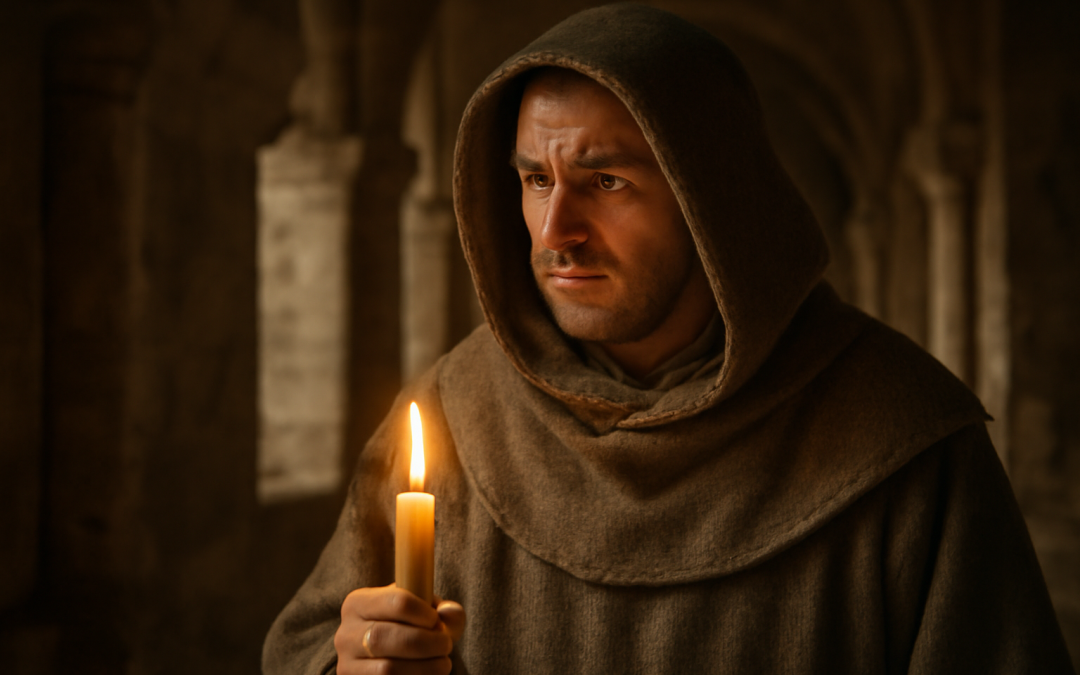
In the quiet shadows of a medieval monastery, where whispers echo through ancient stone corridors and the flickering candlelight reveals more than it conceals, an intricate dance of mystery and faith unfolds. This story, steeped in historical detail and intellectual inquiry, invites readers to journey through both the labyrinthine passages of a 14th-century abbey and the equally complex corridors of the human mind and spirit. With its richly woven narrative, the novel sets the stage for an engrossing exploration of truth, belief, and the often murky interface between reason and faith.
At its core, the plot revolves around a series of enigmatic deaths that disrupt the monastic peace, challenging the protagonists—both a seasoned inquisitor and his young assistant—to untangle a web of secrets hidden beneath layers of religious devotion and scholarly pursuit. The atmosphere is saturated with a palpable tension, where the pursuit of knowledge clashes with the rigid dogma of the church, producing a compelling conflict that drives the narrative forward. This tension invites readers to ponder the very nature of truth, especially when it is filtered through the complex lenses of power, fear, and belief.
The setting is not merely a backdrop but a living, breathing entity in the story. The abbey itself, with its labyrinthine library and cloistered silence, symbolizes the vast repository of knowledge that humanity has collected—and the perilous limits imposed upon it by institutional authorities. Each passageway and chamber serves as a metaphor for the intellectual and spiritual trials faced by the characters, underscoring the difficulty of discovering truth in a world that often prefers mystery and control to clarity and freedom.
What elevates this tale beyond a simple whodunit is its deep philosophical undercurrent. The narrative does not just seek to uncover a murderer but also wrestles with questions that have reverberated through centuries: Can faith coexist with reason? What constitutes heresy, and who defines it? How do individuals reconcile their personal beliefs with the demands of the institutions to which they belong? These questions are woven into the mystery, creating a textured story that challenges readers intellectually and emotionally.
The characters themselves personify this struggle. The inquisitor epitomizes the sharp intellect and skeptical inquiry of the Enlightenment’s early stirrings, while his novice companion represents the curious spirit, caught between reverence for tradition and the desire for understanding. Their dialogue and investigations unfold with deliberate pacing, mirroring the painstaking process of uncovering truth piece by piece, ambiguous clue by ambiguous clue. Through their journey, readers glimpse the precarious balance between doubt and faith that defines human existence.
Moreover, the novel’s portrayal of faith is neither blind nor simplistic; instead, it captures its complex, multifaceted nature. Faith is depicted as a source of strength and community, but also as a mechanism for control and fear. The ecclesiastical hierarchy is shown in all its human complexity—capable of both profound kindness and ruthless ambition. This nuanced depiction invites reflection on the role of religion in society, especially during times when knowledge and power are closely guarded and contested.
The mystery itself unfolds with intricacy and subtlety. Clues are interspersed throughout the narrative, often hidden beneath layers of allegory and historical allusion. This requires readers to engage actively, piecing together fragments of information and interpreting symbolic gestures. The intellectual rigor demanded by the plot adds to the immersion, making the mystery not only entertaining but also deeply satisfying from a cognitive perspective.
Stylistically, the narrative embraces a tone that is at once somber and evocative, capturing the austere beauty of the medieval period while imbuing it with a timeless resonance. The prose is carefully crafted, with attention to detail that brings the era to life without overwhelming the reader. Descriptions of the abbey’s architecture, the dense atmosphere of the library, and the rituals of monastic life enrich the setting and deepen the mood, immersing readers in a world where every shadow might conceal a secret.
The relationship between the main characters is another highlight, providing a human element that anchors the broader thematic concerns. Their dialogues reveal not only their developing bond but also their evolving understanding of the world and themselves. As the plot progresses, revelations about their pasts and personal convictions add layers to their motivations and actions, enhancing the emotional depth of the story.
In addition to the central mystery and philosophical reflection, the work also addresses broader historical and social themes. It captures the turbulent nature of the era—marked by political intrigue, religious strife, and intellectual ferment—illuminating how these forces shape the lives and decisions of individuals. Through this historical lens, the narrative explores the perennial tension between innovation and tradition, highlighting the sacrifices made by those who dare to question prevailing norms.
Integral to this exploration is the portrayal of knowledge itself. The abbey’s vast library symbolizes the human thirst for understanding, but also the fragility of that knowledge in a world often hostile to change. The story critiques the censorship and dogmatism that once stifled scientific and philosophical advancement, while also acknowledging the genuine fears and uncertainties that accompany new ideas. This balanced approach adds a layer of historical authenticity and philosophical depth to the tale.
One of the most compelling aspects is how the novel intertwines intellectual mystery with spiritual inquiry, demonstrating that the search for truth is as much an internal journey as an external one. The characters’ investigations into the murders mirror their personal quests for meaning, illustrating the idea that faith and reason need not be adversaries but can coexist in a dynamic, sometimes uneasy partnership. This synthesis encourages readers to reflect on their own beliefs and the ways in which knowledge and spirituality shape their lives.
The themes explored resonate beyond the historical setting, offering insights relevant to contemporary society. Questions about authority, truth, censorship, and belief continue to be pressing concerns in the modern world. The story’s examination of these issues underscores the enduring complexity of human understanding and the perpetual tension between openness and control. By situating these themes in a richly detailed medieval context, the narrative provides a fresh perspective on familiar dilemmas.
The pacing of the story carefully balances moments of intense suspense with quieter, contemplative scenes, allowing readers to absorb both the external action and the internal reflection. This rhythm enhances the immersive experience, drawing readers deeper into the unfolding mystery while encouraging thoughtful engagement with the philosophical questions posed. The deliberate unfolding mirrors the gradual revelation of not only the plot’s secrets but also the characters’ innermost struggles.
In conclusion, this narrative offers a masterful blend of mystery and faith, set against a vividly realized historical backdrop. Its layered storytelling invites readers into a profound exploration of belief, knowledge, and the human condition. Through its compelling characters, intricate plot, and thoughtful themes, it challenges assumptions and ignites curiosity, proving that the search for truth—whether spiritual or intellectual—is a timeless journey marked by both peril and hope.

by admin | Jul 21, 2026 | Reviews
Margaret Atwood’s dystopian narrative, as adapted in the television series, offers a haunting exploration of authoritarian control and the profound ways it manifests through dominion over the human body. The story unfolds in a society where individual autonomy, particularly that of women, is systematically stripped away under the guise of religious and political ideology. This chilling vision serves as a potent commentary on the fragility of rights and freedoms when power concentrates in oppressive hands. The series not only presents a grim speculative future but also forces viewers to reckon with the enduring implications of systemic control over bodies, identity, and agency.
At the heart of the narrative lies the protagonist, whose journey vividly illustrates the collision between resistance and conformity in a totalitarian regime. Through her eyes, the audience experiences the brutal reality of a society where women are reduced to their reproductive functions, their worth measured solely by their fertility. The meticulously crafted world-building immerses viewers in a reality where language, dress, and behavior are tightly regulated—each detail reinforcing the extent of control wielded over every aspect of daily life. The interplay between silence and voice becomes a recurring motif, reflecting the broader theme of oppression and the struggle to reclaim one’s narrative.
The show’s portrayal of power dynamics extends beyond the overtly oppressive government elite to the relationships among the oppressed themselves. Through these interpersonal interactions, the series exposes the complexities of complicity, survival, and revolt. The social structures imposed by the regime infiltrate citizens’ personal lives, creating an environment rife with mistrust, fear, and betrayal. This internalized oppression complicates the viewers’ understanding of victimhood and agency, as some characters choose collaboration over resistance while others engage in subtle acts of defiance. Such nuances enrich the story, demonstrating that power over bodies encompasses both external domination and internal psychological entanglement.
Visual storytelling plays a critical role in translating the themes of bodily autonomy and control on screen. The deliberate use of color, costume, and setting underscores the rigid hierarchies and social order within the society. The Handmaids’ signature red robes and white bonnets, for instance, symbolize both fertility and enforced conformity, visibly marking women as property of the state. These visual cues communicate volumes without the need for exposition, enhancing the emotional impact of scenes depicting subjugation or rebellion. Moreover, the contrast between public suppression and private moments of vulnerability highlights the human cost of such a system.
The exploration of reproductive rights is arguably the most poignant element in the series. By imagining a future where a declining birth rate triggers extreme measures to control women’s bodies, the narrative draws uncomfortable parallels to contemporary debates around bodily autonomy. It interrogates the consequences of reducing individuals to biological functions and questions the moral and ethical implications of legislating reproduction. The tension between individual freedom and state control is laid bare, revealing how the politicization of fertility can erode fundamental human rights. In this way, the series serves as both a cautionary tale and a reflection of real-world struggles over gender, power, and autonomy.
The psychological impact of such systemic control cannot be overstated, and the series delves deeply into the mental and emotional toll on its characters. The constant surveillance, threat of punishment, and enforced roles create an atmosphere of pervasive fear and trauma. Characters exhibit various coping mechanisms, from numb acquiescence to fierce rebellion. These portrayals offer insight into the multifaceted nature of resistance—sometimes visible and overt, other times subtle and internal. The narrative challenges viewers to empathize with the complexities of survival under oppression, acknowledging that power over bodies is as much a war for the mind as it is for the physical self.
Integral to the storytelling is the feminist lens through which the series is constructed. It critiques patriarchal systems that seek to dominate and control women’s bodies under the pretense of protection or moral order. By illuminating the extreme consequences of such ideologies, it underscores the urgency of safeguarding reproductive rights and bodily autonomy. The show’s layered characters resist simplistic categorization, portraying a range of perspectives and reactions to oppression. This complexity enriches the narrative, fostering a deeper understanding of the intersections between power, gender, and identity.
Throughout the series, spirituality and religion are wielded as tools of control, creating a rigid moral framework that justifies the subjugation of women. This exploitation of faith reveals how dogma can be manipulated to serve political ends, disguising cruelty as divine mandate. The juxtaposition of religious rhetoric with the stark realities of violence and coercion exposes the hypocrisy inherent in such systems. This thematic element invites a critical examination of the ways in which ideology can underpin and perpetuate systems of domination over bodies and minds alike.
The narrative’s temporal structure—shifting between present events, flashbacks, and inner thoughts—adds depth to the character development and world-building. These shifts illuminate the gradual erosion of freedoms and the characters’ past lives, providing context for their current states. This nonlinear storytelling reinforces the sense of loss and longing, emphasizing what has been sacrificed in the name of order. It also highlights the tension between memory and enforced forgetting, a struggle to retain personal identity within a dehumanizing regime.
Performance and direction contribute significantly to the emotional resonance of the story. The cast brings nuance to characters navigating trauma, complicity, and hope, rendering their struggles both personal and universal. Moments of silence and subtle expressions communicate volumes about internal conflict and resilience. The show’s pacing balances moments of tension with quieter scenes of reflection, allowing the audience to absorb the psychological weight of the narrative. Directional choices often focus on close-ups and confined spaces, visually reinforcing the themes of entrapment and control over bodies.
Beyond the confines of the fictional world, the series resonates with contemporary socio-political realities. It serves as a stark reminder of the fragility of rights, the potential for regression, and the necessity of vigilance against authoritarianism. By dramatizing extreme scenarios, the narrative prompts reflection on ongoing issues such as bodily autonomy, gender inequality, and state surveillance. It functions as a mirror to the present, warning of the consequences when societies permit the erosion of personal freedoms and the imposition of control over bodies.
The depiction of resistance within the story is multifaceted, highlighting that rebellion can take many forms—from overt defiance to subtle subversion. Characters risk their safety to maintain connections, share knowledge, or sabotage the mechanisms of control. These acts of courage serve as vital reminders of human resilience and the enduring desire for freedom. Resistance is portrayed not only as physical struggle but also as the maintenance of hope, identity, and memory against overwhelming odds. This dimension adds a layer of optimism and complexity, balancing the narrative’s often bleak tone.
The psychological and physical control exercised by the regime is often enforced through ritualized violence and coercion. Such brutality not only enforces compliance but also aims to break the spirit and erase individuality. The series does not shy away from depicting this violence, which intensifies the emotional stakes and drives home the cost of power wielded in such a manner. However, it also highlights the strength of those who endure and fight back, reinforcing the theme that control over bodies cannot fully suppress the human spirit.
By focusing on women’s bodies as the site of political and social control, the narrative engages with broader feminist and human rights discourses. It challenges viewers to consider the ongoing struggles for bodily autonomy in various cultural and legal contexts worldwide. The depiction of forced reproduction and denial of agency connects to historical and contemporary instances of reproductive injustice. In making these connections, the series raises awareness and encourages dialogue about the importance of bodily sovereignty as a fundamental right.
The power over bodies depicted in the series extends into the realm of identity and selfhood. Forced roles, surveillance, and public humiliation attempt to reshape how characters perceive themselves and are perceived by others. The struggle to retain individual identity within such confines is a constant battle, underscoring the deep psychological ramifications of systemic control. The narrative shows that reclaiming one’s body is also reclaiming one’s voice, history, and humanity.
In conclusion, the series offers a profound and unsettling examination of authoritarian control, particularly as it relates to power over bodies. Through its richly drawn characters, compelling storytelling, and evocative visual language, it explores the intersections of politics, gender, and identity with unflinching honesty. It serves as a critical reminder of the importance of vigilance in protecting bodily autonomy and the resilience required to resist oppressive systems. Ultimately, it is a testament to the enduring human spirit amid attempts to suppress it, making it a landmark narrative for contemporary audiences grappling with questions of freedom, control, and justice.

by admin | Jul 20, 2026 | Reviews
Kurt Vonnegut’s *Slaughterhouse-Five* occupies a singular place in American literature, confounding traditional narratives about war through its fluid structure, dark humor, and deep philosophical insights. At its core, the novel is a profound meditation on the absurdity and destructiveness of war, told through the fractured experiences of Billy Pilgrim, a man unstuck in time. This elusive narrative technique captures the chaos and trauma of warfare in a way that straightforward chronological storytelling cannot, making *Slaughterhouse-Five* a timeless critique of not only conflict but also human perception and memory.
The story pivots on the World War II experiences of Billy Pilgrim, whose involuntary time travel serves as both a literal and metaphorical device. Billy’s non-linear journey across moments of his life—and beyond—disrupts the conventional storytelling mode, echoing the fragmented nature of trauma itself. Readers are transported from his mundane post-war life as an optometrist to the harrowing Dresden bombing, and even further into encounters with alien beings called Tralfamadorians. This disjointedness mirrors the fractured human psyche under extreme stress, brilliantly illustrating how traumatic memories defy straight lines and singular interpretations. The novel thereby challenges readers to reconsider how events are remembered and how war imprints itself on individuals’ consciousness indefinitely.
One of the most striking aspects of *Slaughterhouse-Five* is the way Vonnegut deftly blends absurdity with horror. The narration, often perfused with an ironic detachment, refuses to allow the reader—and perhaps the protagonist himself—to fully process the stark brutality of war. The refrain “So it goes,” repeated throughout the text whenever death occurs, operates both as a resigned acknowledgment of mortality and a critique of the normalization of violence. This phrase encapsulates the novel’s ambivalent stance: death is inevitable and omnipresent, yet societal mechanisms often render it banal. This sharp tonal contrast intensifies the emotional impact without resorting to overt moralizing, allowing the horror to speak for itself through understatement and repetition.
The Dresden bombing, the central historical event around which the novel revolves, is presented in a way that captures its sheer devastation and senselessness. Vonnegut, drawing from his own experience as a prisoner of war witnessing the firebombing, conveys the catastrophic scale of destruction and loss without descending into melodrama. The imagery is chilling—descriptions of the city reduced to rubble and fire evoke a visceral sense of loss, while the survivors’ dislocation and confusion underscore the human cost of such military actions. Yet, despite the vivid depictions of mass suffering, the novel refrains from a simplistic blame game. Instead, it asks difficult questions about the nature of human cruelty and the cyclical nature of violence that permeates history.
Vonnegut’s use of science fiction motifs, particularly the inclusion of the Tralfamadorians, adds a philosophical dimension to the novel’s exploration of time, fate, and free will. These extraterrestrial beings perceive all moments of time simultaneously, teaching Billy to accept the inevitabilities of existence, including atrocities like war. Their mantra—that all moments are structured and unchangeable—forces readers to confront the uncomfortable idea that suffering may be eternally fixed, and yet, simultaneously, it implies a certain serenity in acceptance. This speculative framework challenges traditional war narratives centered on heroism and change, instead positing a universe indifferent to human notions of justice and progress. Through this, the novel expands its reach from a historical reflection into a meditation on existence itself.
The character of Billy Pilgrim is deliberately constructed to subvert the archetypal wartime hero. Far from valiant or overtly disciplined, he is often passive, bewildered, and eccentric. His physical frailty and mental disorientation represent a break from glorified images of soldiers, highlighting vulnerability and confusion instead. Through Billy, Vonnegut critiques the romanticism of war and the societal expectations placed on those who fight. This focus on the human, rather than the heroic, shifts the narrative toward the psychological and emotional repercussions of combat. Billy’s experiences underscore how war indiscriminately alters lives, often leaving individuals fragmented and struggling to make sense of their experiences long after the fighting ends.
Additionally, the narrative voice of *Slaughterhouse-Five* is notable for its meta-fictional quality. Vonnegut inserts himself into the story as a semi-fictionalized character, blending autobiography with fiction and blurring the distinction between author, narrator, and protagonist. This technique draws attention to the act of storytelling itself—how stories about war are constructed and how memory shapes history. By reminding readers that this is a narrative filtered through an individual lens, Vonnegut invites critical reflection on the reliability of history and the ways trauma is shared or silenced. This layered narrative voice enriches the text, adding complexity to its themes of truth, memory, and representation.
The novel’s structure further dismantles conventional expectations. The fragmented timeline not only mirrors Billy’s temporal dislocation but also challenges the reader’s comfort with linear progression. This structural innovation reflects the chaos of war and trauma, where moments are no longer connected by simple cause and effect but are fragmented and recurring. This technique also allows Vonnegut to juxtapose moments of absurdity, humor, and horror with fluidity, creating a narrative rhythm that echoes the unpredictability of life itself. The carefully crafted disarray serves to immerse the reader in the disorientation experienced by soldiers and survivors, forging a deep empathy that transcends conventional war storytelling.
In the broader context of post-World War II literature, *Slaughterhouse-Five* occupies a critical role in reshaping how war stories are told. Vonnegut’s blend of satire, science fiction, and autobiography opened new avenues for understanding wartime experience, moving beyond patriotic glorification or bleak despair. The novel’s influence extends into contemporary discussions about the ethics of war, the trauma of combat, and the representation of violence in art. Its refusal to provide easy answers or neatly wrapped endings is reflective of real-world complexities. By challenging readers to grapple with the uncomfortable truths of war—including its randomness, cruelty, and irreversible impact—it remains an essential text in both literary and historical scholarship.
Moreover, the novel’s anti-war message resonates strongly in a world still grappling with conflict and its aftermath. Vonnegut’s work is distinctly humanist, emphasizing the futility of violence and the common suffering it brings across all sides. It does not simply oppose war ideologically but exposes the way human systems perpetuate violence under the guise of progress and necessity. This nuanced critique encourages readers to reevaluate prevailing attitudes towards conflict, questioning not only individual responsibility but collective complicity. Its enduring relevance speaks to the universal human desire for peace amid persistent cycles of violence.
*Slaughterhouse-Five* also stands as a pioneering example of blending literary form with thematic content. Its innovative narrative structure, satirical tone, and philosophical depth demonstrate how form can augment meaning, offering a richer experience than conventional storytelling might. The novel is a testament to the power of experimental literature to confront difficult subjects in ways that engage emotionally, intellectually, and ethically. Its genre-defying nature has inspired countless authors and remains a touchstone for those seeking to push the boundaries of narrative art.
In essence, Vonnegut’s work challenges readers to confront the paradoxes of existence—life alongside death, order amidst chaos, humor within horror. Through Billy Pilgrim’s journey, it explores how individuals navigate a world where rational explanations often fail, and suffering appears senseless. Yet, within the novel’s stark realism and cosmic indifference lies a profound empathy for human fragility and resilience. The interplay of temporal dislocation and wartime trauma elevates the story into something far more than a recounting of historical events; it becomes a meditation on time, memory, and the enduring scars of violence.
Ultimately, the novel leaves its audience with an ambiguous but meaningful message. It refuses to provide closure or comfort, instead insisting on the necessity of remembering—of refusing to accept “so it goes” as mere resignation. This insistence on bearing witness is itself an act of resistance against the forgetting and repetition of war’s horrors. Through its innovative narrative and potent thematic concerns, *Slaughterhouse-Five* endures as a vital work that continues to challenge and inspire readers to rethink war and its place in human experience. Its layers of meaning and complex storytelling ensure its position not only as a powerful anti-war novel but as a profound exploration of how we understand and live through trauma.