Margaret Atwood’s dystopian narrative, as adapted in the television series, offers a haunting exploration of authoritarian control and the profound ways it manifests through dominion over the human body. The story unfolds in a society where individual autonomy, particularly that of women, is systematically stripped away under the guise of religious and political ideology. This chilling vision serves as a potent commentary on the fragility of rights and freedoms when power concentrates in oppressive hands. The series not only presents a grim speculative future but also forces viewers to reckon with the enduring implications of systemic control over bodies, identity, and agency.
At the heart of the narrative lies the protagonist, whose journey vividly illustrates the collision between resistance and conformity in a totalitarian regime. Through her eyes, the audience experiences the brutal reality of a society where women are reduced to their reproductive functions, their worth measured solely by their fertility. The meticulously crafted world-building immerses viewers in a reality where language, dress, and behavior are tightly regulated—each detail reinforcing the extent of control wielded over every aspect of daily life. The interplay between silence and voice becomes a recurring motif, reflecting the broader theme of oppression and the struggle to reclaim one’s narrative.
The show’s portrayal of power dynamics extends beyond the overtly oppressive government elite to the relationships among the oppressed themselves. Through these interpersonal interactions, the series exposes the complexities of complicity, survival, and revolt. The social structures imposed by the regime infiltrate citizens’ personal lives, creating an environment rife with mistrust, fear, and betrayal. This internalized oppression complicates the viewers’ understanding of victimhood and agency, as some characters choose collaboration over resistance while others engage in subtle acts of defiance. Such nuances enrich the story, demonstrating that power over bodies encompasses both external domination and internal psychological entanglement.
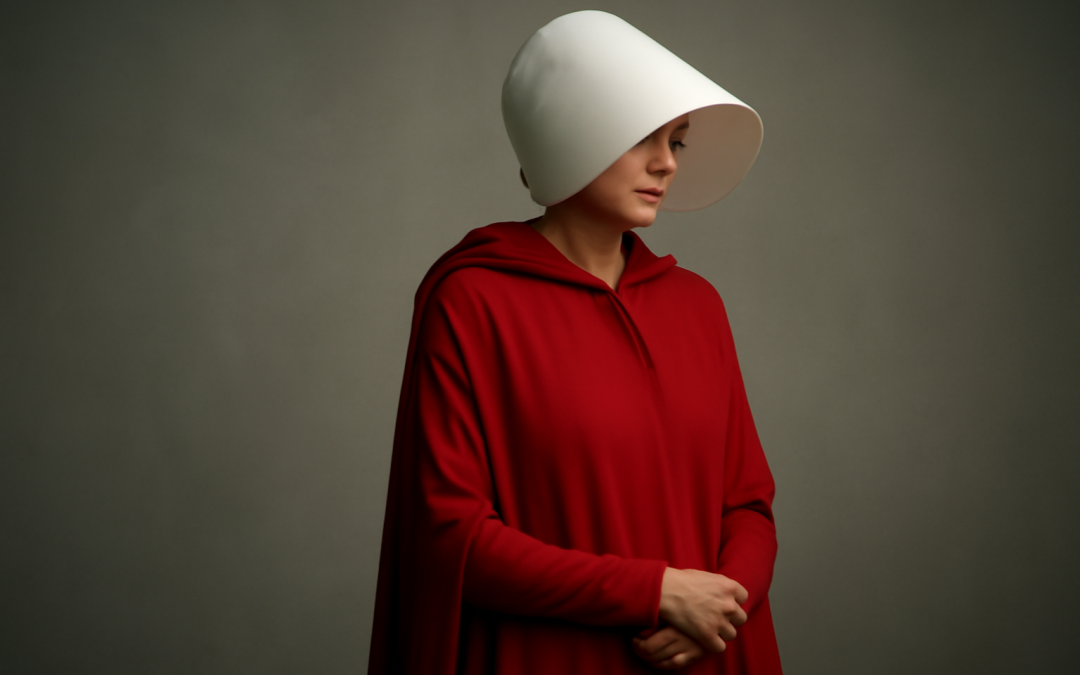
Visual storytelling plays a critical role in translating the themes of bodily autonomy and control on screen. The deliberate use of color, costume, and setting underscores the rigid hierarchies and social order within the society. The Handmaids’ signature red robes and white bonnets, for instance, symbolize both fertility and enforced conformity, visibly marking women as property of the state. These visual cues communicate volumes without the need for exposition, enhancing the emotional impact of scenes depicting subjugation or rebellion. Moreover, the contrast between public suppression and private moments of vulnerability highlights the human cost of such a system.
The exploration of reproductive rights is arguably the most poignant element in the series. By imagining a future where a declining birth rate triggers extreme measures to control women’s bodies, the narrative draws uncomfortable parallels to contemporary debates around bodily autonomy. It interrogates the consequences of reducing individuals to biological functions and questions the moral and ethical implications of legislating reproduction. The tension between individual freedom and state control is laid bare, revealing how the politicization of fertility can erode fundamental human rights. In this way, the series serves as both a cautionary tale and a reflection of real-world struggles over gender, power, and autonomy.
The psychological impact of such systemic control cannot be overstated, and the series delves deeply into the mental and emotional toll on its characters. The constant surveillance, threat of punishment, and enforced roles create an atmosphere of pervasive fear and trauma. Characters exhibit various coping mechanisms, from numb acquiescence to fierce rebellion. These portrayals offer insight into the multifaceted nature of resistance—sometimes visible and overt, other times subtle and internal. The narrative challenges viewers to empathize with the complexities of survival under oppression, acknowledging that power over bodies is as much a war for the mind as it is for the physical self.
Integral to the storytelling is the feminist lens through which the series is constructed. It critiques patriarchal systems that seek to dominate and control women’s bodies under the pretense of protection or moral order. By illuminating the extreme consequences of such ideologies, it underscores the urgency of safeguarding reproductive rights and bodily autonomy. The show’s layered characters resist simplistic categorization, portraying a range of perspectives and reactions to oppression. This complexity enriches the narrative, fostering a deeper understanding of the intersections between power, gender, and identity.
Throughout the series, spirituality and religion are wielded as tools of control, creating a rigid moral framework that justifies the subjugation of women. This exploitation of faith reveals how dogma can be manipulated to serve political ends, disguising cruelty as divine mandate. The juxtaposition of religious rhetoric with the stark realities of violence and coercion exposes the hypocrisy inherent in such systems. This thematic element invites a critical examination of the ways in which ideology can underpin and perpetuate systems of domination over bodies and minds alike.
The narrative’s temporal structure—shifting between present events, flashbacks, and inner thoughts—adds depth to the character development and world-building. These shifts illuminate the gradual erosion of freedoms and the characters’ past lives, providing context for their current states. This nonlinear storytelling reinforces the sense of loss and longing, emphasizing what has been sacrificed in the name of order. It also highlights the tension between memory and enforced forgetting, a struggle to retain personal identity within a dehumanizing regime.
Performance and direction contribute significantly to the emotional resonance of the story. The cast brings nuance to characters navigating trauma, complicity, and hope, rendering their struggles both personal and universal. Moments of silence and subtle expressions communicate volumes about internal conflict and resilience. The show’s pacing balances moments of tension with quieter scenes of reflection, allowing the audience to absorb the psychological weight of the narrative. Directional choices often focus on close-ups and confined spaces, visually reinforcing the themes of entrapment and control over bodies.
Beyond the confines of the fictional world, the series resonates with contemporary socio-political realities. It serves as a stark reminder of the fragility of rights, the potential for regression, and the necessity of vigilance against authoritarianism. By dramatizing extreme scenarios, the narrative prompts reflection on ongoing issues such as bodily autonomy, gender inequality, and state surveillance. It functions as a mirror to the present, warning of the consequences when societies permit the erosion of personal freedoms and the imposition of control over bodies.
The depiction of resistance within the story is multifaceted, highlighting that rebellion can take many forms—from overt defiance to subtle subversion. Characters risk their safety to maintain connections, share knowledge, or sabotage the mechanisms of control. These acts of courage serve as vital reminders of human resilience and the enduring desire for freedom. Resistance is portrayed not only as physical struggle but also as the maintenance of hope, identity, and memory against overwhelming odds. This dimension adds a layer of optimism and complexity, balancing the narrative’s often bleak tone.
The psychological and physical control exercised by the regime is often enforced through ritualized violence and coercion. Such brutality not only enforces compliance but also aims to break the spirit and erase individuality. The series does not shy away from depicting this violence, which intensifies the emotional stakes and drives home the cost of power wielded in such a manner. However, it also highlights the strength of those who endure and fight back, reinforcing the theme that control over bodies cannot fully suppress the human spirit.
By focusing on women’s bodies as the site of political and social control, the narrative engages with broader feminist and human rights discourses. It challenges viewers to consider the ongoing struggles for bodily autonomy in various cultural and legal contexts worldwide. The depiction of forced reproduction and denial of agency connects to historical and contemporary instances of reproductive injustice. In making these connections, the series raises awareness and encourages dialogue about the importance of bodily sovereignty as a fundamental right.
The power over bodies depicted in the series extends into the realm of identity and selfhood. Forced roles, surveillance, and public humiliation attempt to reshape how characters perceive themselves and are perceived by others. The struggle to retain individual identity within such confines is a constant battle, underscoring the deep psychological ramifications of systemic control. The narrative shows that reclaiming one’s body is also reclaiming one’s voice, history, and humanity.
In conclusion, the series offers a profound and unsettling examination of authoritarian control, particularly as it relates to power over bodies. Through its richly drawn characters, compelling storytelling, and evocative visual language, it explores the intersections of politics, gender, and identity with unflinching honesty. It serves as a critical reminder of the importance of vigilance in protecting bodily autonomy and the resilience required to resist oppressive systems. Ultimately, it is a testament to the enduring human spirit amid attempts to suppress it, making it a landmark narrative for contemporary audiences grappling with questions of freedom, control, and justice.