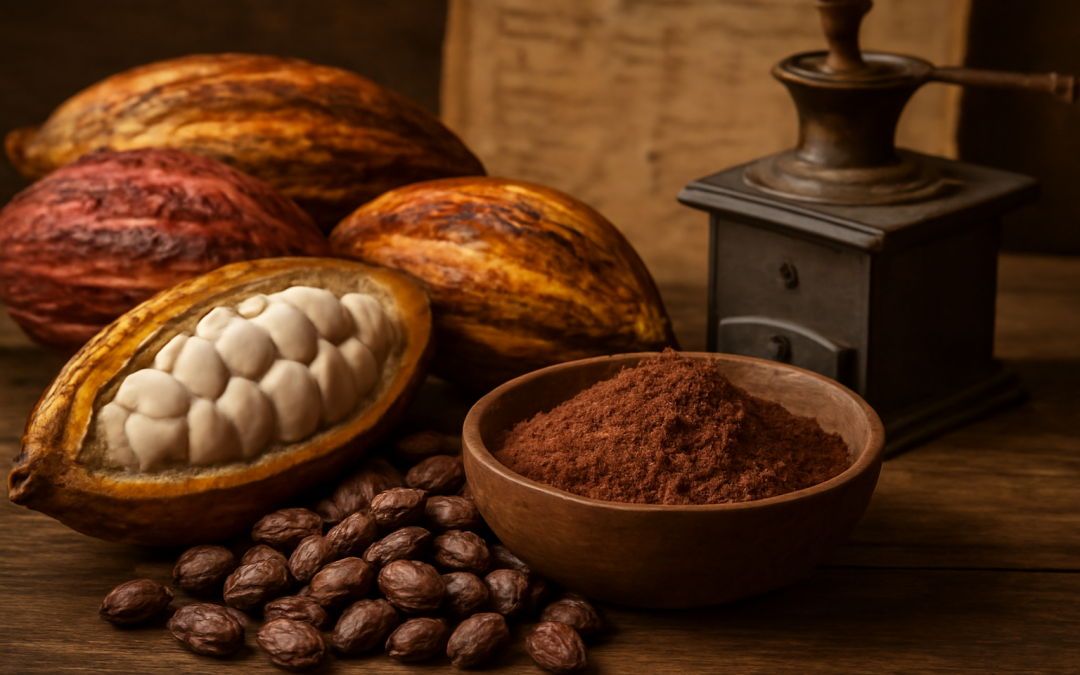
The story of cocoa and chocolate is deeply intertwined with human civilization, tracing back thousands of years to ancient cultures that revered the cacao bean not only as a source of sustenance but also as a symbol of power and spirituality. Originating in the tropical rainforests of Central and South America, the cacao tree has played a crucial role in the social, economic, and cultural development of many indigenous peoples. Today, chocolate is a global phenomenon enjoyed in countless forms, yet its origins remain a fascinating chronicle of exploration, adaptation, and innovation.
The earliest evidence of cocoa cultivation dates back to around 1900 BCE in Mesoamerica, where the Olmec civilization is believed to have been among the first to domesticate the cacao tree. The Olmecs likely used the cacao beans to make a frothy, bitter beverage, which was quite different from the sweet chocolate treats familiar to modern audiences. This early chocolate drink was often mixed with spices such as chili, vanilla, and annatto, and was consumed during ritualistic events, highlighting its importance beyond mere nourishment.
Following the Olmecs, the Maya civilization, which flourished from 250 to 900 CE, elevated cocoa to a higher cultural status. The Maya regarded cacao as a divine gift from the gods, and it was frequently associated with fertility, life, and death. Archaeological findings reveal that cacao beans were used as currency and were inscribed on sacred objects and pottery. The Maya consumed chocolate in ceremonial practices, and the beverage was believed to have invigorating and aphrodisiac properties. Their preparation method involved roasting the beans, grinding them into a paste, and mixing them with water to create a thick, spicy drink.
The Aztecs, who came after the Maya and ruled much of what is now Mexico during the 14th and 15th centuries, placed even greater emphasis on cacao. For the Aztec empire, cocoa was considered the food of the elite, including emperors and priests. The Aztec ruler Montezuma II reportedly drank large quantities of a frothy, bitter cacao beverage daily to boost vitality and stamina. Like the Maya, the Aztecs used chocolate in religious rituals and valued cocoa beans as currency. In fact, cacao beans were so prized that they were used to pay workers and merchants, and sometimes even as a form of tribute to the empire.
With the arrival of the Spanish conquistadors in the early 16th century, cocoa and chocolate embarked on a transformative journey that would eventually lead to their widespread popularity across Europe and the rest of the world. Hernán Cortés and his men encountered the Aztec empire and were introduced to the cacao beverage. Although initially unfamiliar with the taste, the Spaniards admired the novelty and vigor associated with it. They brought cacao beans back to Spain, where the drink was adapted to suit European palates by adding sugar, cinnamon, and other spices, turning it into a luxurious delicacy often enjoyed by royalty and the aristocracy.
As chocolate became more refined and sweetened, it gained remarkable popularity throughout Europe during the 17th and 18th centuries. The Spanish kept the source of cocoa a closely guarded secret for many years, delaying its spread to other nations. However, the demand for the exotic treat soon led to cacao cultivation being introduced to European colonies in the Caribbean, West Africa, and Southeast Asia. These new plantations allowed for mass production, making chocolate increasingly accessible beyond the elite circles, but often at the cost of exploiting enslaved and indigenous laborers who worked under harsh conditions on cacao farms.
The transformation of chocolate from a bitter, spiced drink to the solid chocolate bars and confections familiar today was a process propelled by technological advancements during the Industrial Revolution. In the early 19th century, innovators developed methods to extract cocoa butter from cocoa mass, resulting in a smoother, creamier product that could be molded into solid forms. The invention of the steam-powered cocoa grinder allowed for large-scale processing of cacao beans, and in 1828, Coenraad Johannes van Houten patented a method to alkalize cacao powder. This Dutch process significantly improved chocolate’s solubility and taste.
In 1847, another milestone was achieved when Joseph Fry created the first modern chocolate bar by combining cocoa butter, sugar, and chocolate liquor into a moldable paste. Soon after, innovations by Swiss chocolatiers like Daniel Peter and Rodolphe Lindt introduced milk chocolate and conching, respectively. Conching is a process of refining chocolate’s texture by continuous mixing, which greatly enhanced its smoothness and flavor. These developments marked the beginning of the chocolate industry as it is known today, with companies such as Nestlé, Lindt, Cadbury, and Hershey coming to dominate markets worldwide.
Cacao cultivation and chocolate production have not only shaped cultural traditions but have also had significant economic and environmental implications. While chocolate consumption saw a dramatic increase globally, the concentration of cacao farming in a limited number of tropical regions exposed vulnerabilities related to political instability, climate change, and unsustainable farming practices. Many modern initiatives now focus on promoting fair trade, organic farming, and sustainable sourcing to ensure that cacao farmers receive fair compensation and that environmental degradation is minimized.
On a cultural level, chocolate continues to hold a place of affection and celebration in societies around the globe. It is deeply embedded in rituals, holidays, and social gatherings. From Valentine’s Day gifts to religious festivals and everyday indulgences, chocolate’s versatility and appeal remain unmatched. Its complex history enriches its role in these customs, serving as a reminder of the ancient roots and modern innovations that have shaped this beloved treat.
In conclusion, the journey of cocoa and chocolate from ancient Mesoamerican civilizations to a global commodity is a testament to human creativity, adaptability, and cultural exchange. What began as a sacred, bitter beverage gradually evolved into an accessible and cherished indulgence with countless variations. The history of cocoa is not only a narrative of culinary development but also a mirror reflecting social hierarchies, economic shifts, and ethical considerations. Today’s appreciation of chocolate is deeply enhanced by understanding the legacy and tradition behind each bite, connecting us with a story that spans continents and centuries.