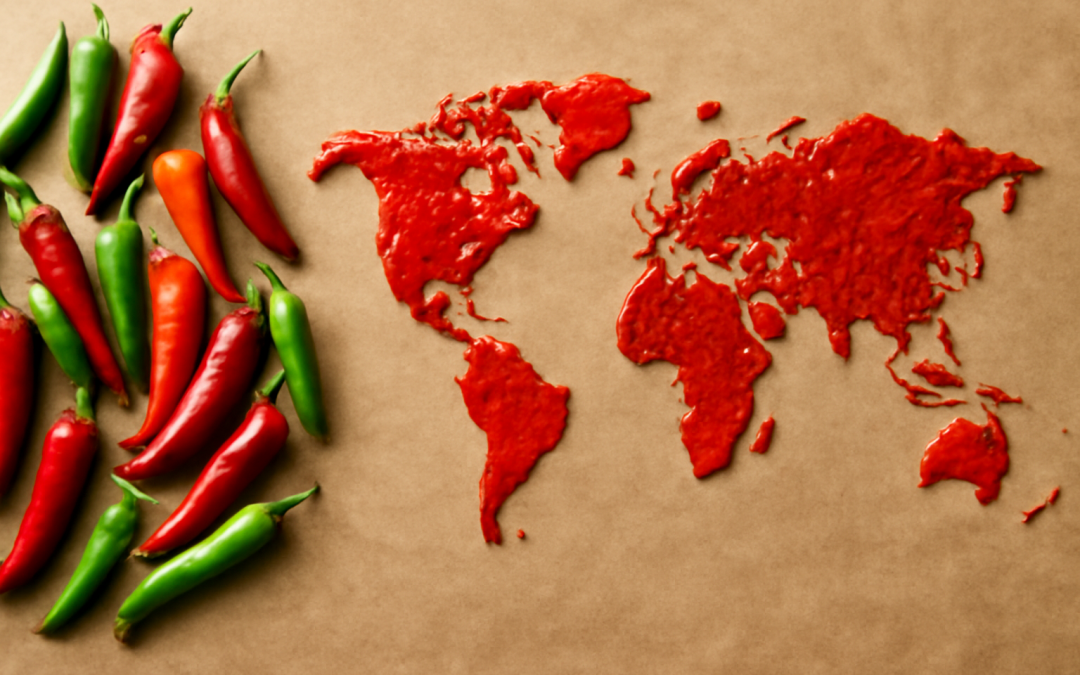
Chili peppers, with their fiery flavor and vibrant colors, have become a global culinary staple, transforming kitchens, cuisines, and cultures across continents. Originally native to the Americas, these pungent fruits have journeyed far beyond their place of origin, weaving themselves into the fabric of food traditions worldwide. The story of chili peppers is one of exploration, adaptation, and cultural exchange, illustrating how a single botanical species has shaped diets and taste preferences around the globe.
The earliest domestication of chili peppers is traced back over 6,000 years to Central and South America, where indigenous communities cultivated different varieties for both culinary and medicinal purposes. Archaeological evidence shows that ancient peoples in regions such as Mexico and Peru were growing chili peppers long before European contact with the New World. For these early cultures, chili peppers were not merely food; they held symbolic and ritual significance, often associated with vitality, protection, and healing. The peppers were used in diverse ways—from flavoring dishes and preserving meats to acting as traditional remedies.
The arrival of Christopher Columbus and other European explorers in the late 15th and early 16th centuries fundamentally changed the trajectory of chili peppers. Columbus is credited with introducing chili peppers to Europe after encountering them in the Caribbean, mistaking them initially for a form of black pepper, which was then a highly prized and expensive spice. From Europe, chili peppers rapidly spread to Africa, Asia, and beyond via the extensive trade networks established by Portuguese, Spanish, and later Dutch and British traders. This spread, often referred to as the Columbian Exchange, ensured that chili peppers found their way into far-flung regions such as India, China, and Southeast Asia, where they were embraced and integrated into local cuisines with remarkable enthusiasm.
In India, chili peppers revolutionized culinary practices, fundamentally altering flavor profiles that had previously relied on indigenous spices like black pepper, long pepper, and various peppers indigenous to the subcontinent. By the 17th century, chili peppers had become deeply embedded in Indian cookery, contributing heat and vibrancy to countless dishes. Indian cuisine’s widespread use of chilies today—ranging from mild to extremely hot varieties—reflects a seamless incorporation that highlights the chili’s adaptability to local tastes and agricultural conditions. The fruit’s ability to thrive in diverse climates allowed it to be cultivated throughout the Indian subcontinent, helping it become a household staple, indispensable in curries, chutneys, and pickles.
Southeast Asia similarly embraced chili peppers with open arms. In countries like Thailand, Vietnam, Indonesia, and the Philippines, spicy flavors counterbalanced the natural sweetness and sourness common in local ingredients, creating balanced and dynamic dishes. The spicy heat of chili peppers complements the intense flavors of fermented fish, lime, coconut milk, and fresh herbs that typify the region’s cooking. Over time, different chili varieties known for specific heat levels and tastes were developed and cultivated, demonstrating the pepper’s capacity for cultural adaptation and selective breeding.
In African nations, chili peppers also found favorable conditions and enthusiastic adoption. By the 18th century, chili cultivation had become widespread across West, East, and Southern Africa. The local cuisines, many of which embraced spicy food to varying degrees, incorporated chili peppers in stews, sauces, and street snacks. For example, in Ethiopia, berbere spice—an essential component of the national cuisine—includes dried chili peppers, providing the characteristic warmth and complexity. The introduction of chili peppers offered an affordable and accessible way to spice up meals, helping to diversify flavors and enhance food preservation practices.
European cuisines exhibited a slightly different adaptation to chili peppers. While initially slow to embrace spicy flavors, due in part to the European palate being accustomed more to herbs and mild spices rather than intense heat, chili peppers eventually found their way into Mediterranean and Eastern European cooking. In Southern Italy and Spain, especially, the use of chili peppers brought new tastes to established dishes like pasta sauces and sausages. This gradual acceptance expanded further as global trade introduced Europeans to a variety of heat levels and chili varieties, which were especially favored in colonial outposts and among immigrant communities.
Another fascinating aspect of the chili pepper’s global spread involves the distinct varieties that have evolved and been selectively bred to suit local preferences and climates. From the mild bell peppers to the intensely hot habaneros and the deceptively small bird’s eye chilies, the plant genus Capsicum offers an extraordinary diversity. This diversity illustrates how chili peppers are not only culinary objects but living witnesses to the interaction between human societies and the environment. The cultivation techniques, harvesting methods, and uses of chili peppers can vary dramatically depending on the region, reflecting local agricultural knowledge and gastronomical innovation.
Moreover, chili peppers have transcended their role as mere ingredients to become symbols of cultural identity and pride. In many parts of the world, chili pepper festivals, traditional ceremonies, and even folklore celebrate the fruit’s importance. For example, in Mexico, the homeland of chili peppers, certain varieties are tied to indigenous heritage and considered national treasures. In parts of India and Africa, specific spicy dishes centered around chili peppers are seen as emblematic of hospitality and tradition. This symbolic significance elevates chili peppers from everyday food items to cultural icons, highlighting human connections to food that go beyond nutrition.
Aside from their flavor contributions, chili peppers have attracted attention for their health benefits, which further contributed to their global popularity. Capsaicin, the compound responsible for their heat, has been extensively studied for its analgesic properties, metabolism-boosting effects, and potential roles in cardiovascular health and weight management. In traditional medicine systems, particularly in Asia and the Americas, chilies have long been used to treat a range of ailments including pain, inflammation, and digestive issues. The continued scientific interest in these properties has helped maintain and even increase demand for chili peppers worldwide.
While the spread of chili peppers has generally been a tale of successful cultural integration, it is also entangled with complex histories of colonization and economic exploitation. The establishment of chili cultivation in some regions was tied to colonial agricultural policies that disrupted indigenous farming systems and sometimes exploited local labor forces. The global demand for chili peppers, driven both by local consumption and international trade, has sometimes mirrored broader patterns of economic inequality and worker exploitation—factors that continue to challenge the sustainable and ethical production of many agricultural goods.
Contemporary global trade ensures that chili peppers are now readily accessible in nearly every part of the world, from bustling urban markets to rural villages. Advances in transportation and cold storage allow producers to export chili peppers fresh, dried, or processed year-round. The international chili market supports millions of smallholder farmers, as well as larger agribusiness operations, linking rural agricultural communities with global supply chains. At the same time, the rise of craft hot sauces, spicy snacks, and global food media have helped chili peppers retain their status as exciting and sought-after food items, further reinforcing their iconic status.
The cultural fusion driven by chili peppers is ongoing and continues to evolve as chefs and home cooks experiment with different varieties and cuisines. Fusion dishes that mix chili peppers with ingredients and techniques from multiple regions symbolize modern globalization’s culinary impact. For example, sriracha, a chili sauce originating in Thailand, has become a global condiment found in fast food outlets and gourmet restaurants alike. Similarly, the American love for “buffalo wings” with cayenne pepper hot sauce reflects the way chili peppers have become fused with local culinary identities far from their origins.
In agricultural terms, research and development efforts focus on improving chili pepper varieties to enhance yield, disease resistance, and flavor profiles. The challenges posed by climate change—such as drought, floods, and temperature extremes—have spurred scientists and farmers to collaborate on developing cultivars capable of withstanding these pressures without sacrificing heat or taste. Genetic research is also unlocking insights into the mechanisms of capsaicin production, which could lead to more precise breeding of chilies for specific consumer needs and cooking applications.
The social implications of chili peppers also merit consideration. In many cultures, the degree of spiciness preferred in food can influence social interaction, food tourism, and regional identity. Some people pride themselves on their tolerance for extremely spicy dishes, while others avoid heat altogether. This spectrum of preferences has fostered entire subcultures around chili peppers, from competitive chili eating contests to artisanal sauce making. These cultural phenomena demonstrate how chili peppers, beyond adding flavor, contribute to shared experiences and communal bonds.
In summary, the journey of chili peppers from their New World origins to their global ubiquity tells a tale of botanical migration tied closely with human history, trade, and culture. Their ability to adapt to varied environments and to integrate into diverse cuisines speaks to a unique botanical and cultural resilience. Beyond their role in flavoring foods, they have become powerful symbols of identity, health, and innovation. As the world continues to embrace and reinvent chili peppers, their story remains a dynamic testament to the interconnectedness of people, plants, and the pleasures of taste.