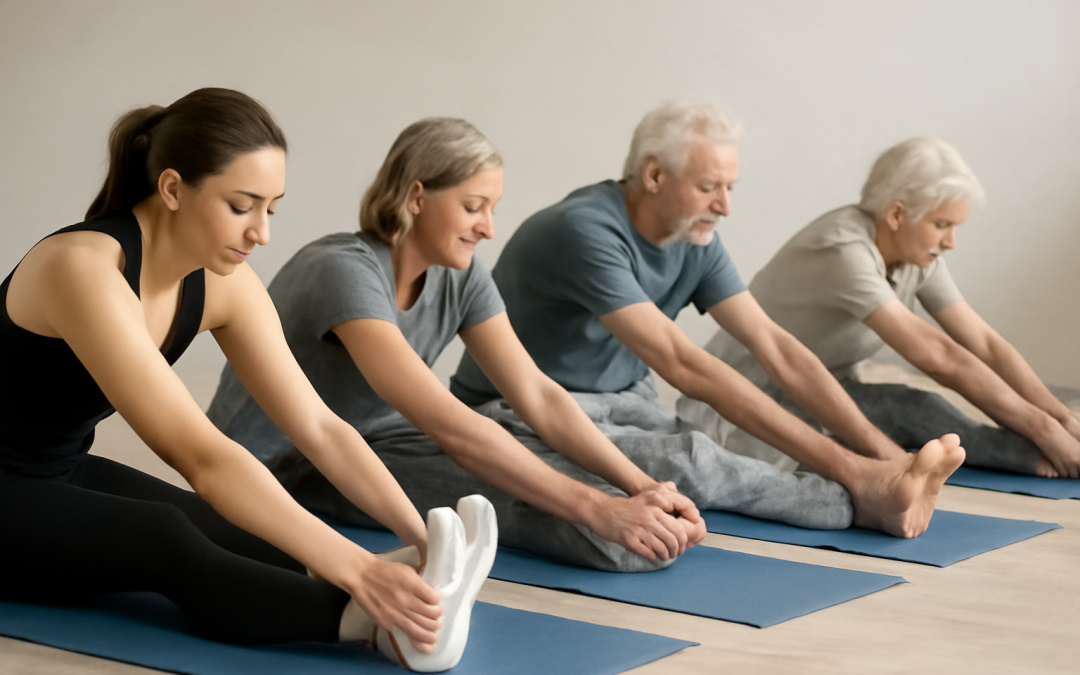
Flexibility is a vital component of physical health that influences daily movement, balance, and overall well-being. As individuals age, noticeable changes occur in the body’s ability to move freely and comfortably. These changes can affect not only quality of life but also susceptibility to injury and chronic conditions. Understanding how flexibility changes with age provides insight into the biological mechanisms at play and highlights the importance of maintaining mobility through appropriate activity and care.
From childhood to early adulthood, the body generally exhibits optimal flexibility. This is due to the high water content in connective tissues, robust muscle elasticity, and a generally active lifestyle that promotes full range of motion. During these years, joints and muscles adapt easily to stretching and repetitive movement, making it easier for the body to maintain its natural flexibility. Children and young adults benefit from rapid cell regeneration, which helps repair muscles and connective tissues efficiently after physical exertion.
However, as people move into middle age, a gradual decline in flexibility often begins. This process is influenced by several physiological changes that occur at the cellular and structural levels. One significant factor is the alteration in the composition and functionality of collagen within connective tissues. Collagen is a primary protein that provides strength and elasticity to ligaments, tendons, and cartilage. With aging, collagen fibers become stiffer and more densely packed, reducing their ability to stretch. This stiffness contributes to a decrease in joint range of motion and muscle suppleness.
Muscle mass and strength also tend to decline with age, a condition known as sarcopenia. Since muscles work in conjunction with tendons and ligaments to enable joint movement, a decrease in muscle quality indirectly affects flexibility. When muscle fibers shrink and weaken, the body struggles to maintain normal movement patterns, resulting in limited mobility. Additionally, a loss of muscle elasticity reduces the dynamic stretch capacity, making activities that require bending or twisting more difficult.
Another contributing factor to reduced flexibility is the decreased production of synovial fluid within the joints. Synovial fluid serves as a lubricant that facilitates smooth movement between cartilage surfaces. Over time, joints may suffer from inflammation and degeneration, such as osteoarthritis, which further impairs flexibility and causes discomfort during motion. These degenerative joint changes are more common as people reach their 50s and beyond, often limiting their willingness to engage in flexibility-enhancing exercises.
Aside from physiological aging, lifestyle choices play a crucial role in determining how mobility evolves. Sedentary behavior accelerates the loss of flexibility. When joints and muscles remain inactive for extended periods, they tend to stiffen due to muscle shortening and connective tissue contraction. People who maintain an active lifestyle, particularly those who include stretching routines, yoga, or Pilates, tend to preserve better flexibility as they grow older. Conversely, lack of regular movement exacerbates flexibility decline, increasing the risk of injury and falls.
The nervous system also influences flexibility. Proprioception, or the body’s ability to sense joint position, typically diminishes with age. This decline affects coordination and balance, which can make it harder for older adults to perform stretching exercises safely and effectively. Reduced proprioceptive awareness may result in overly cautious or improper movements, limiting the extent to which joints are mobilized during daily activities.
Hormonal changes impact flexibility as well. For example, menopause causes a drop in estrogen levels, which affects collagen synthesis and connective tissue health. Women undergoing this phase may notice increased joint stiffness and susceptibility to injury. Men also experience hormonal shifts that influence muscle mass and flexibility, although these changes tend to be more gradual. Understanding these hormonal influences helps tailor flexibility training programs that accommodate physiological differences between individuals.
Flexibility decline can also have psychological consequences. Reduced range of motion can lead to frustration, decreased motivation to participate in physical activities, and feelings of dependency. Social isolation may ensue if mobility becomes significantly impaired, especially in environments that require dynamic movement. Addressing flexibility issues with patience and appropriate interventions helps not only physical health but also mental well-being.
The good news is that flexibility does not have to decline as drastically as might be expected. Regular stretching and specific exercises can preserve and even improve joint mobility well into older age. Incorporating dynamic and static stretching routines, focusing on major muscle groups, and performing low-impact activities such as swimming or tai chi contribute to maintaining a healthy range of motion. Flexibility exercises, when combined with strength training, balance work, and cardiovascular fitness, form a comprehensive approach to healthy aging.
Maintaining flexibility offers numerous benefits beyond ease of movement. It enhances circulation, which helps deliver oxygen and nutrients to muscles and tissues, promoting recovery and overall health. Improved flexibility also supports better posture, reducing strain on the spine and decreasing the likelihood of back pain. Furthermore, increased joint mobility lowers the risk of falls—a leading cause of injury among older adults—by enabling safer, more confident movement patterns.
Physical therapists and fitness professionals often emphasize flexibility training as an integral part of chronic disease management and injury prevention. For individuals with arthritis, stretching can reduce stiffness and improve function. For older adults recovering from surgery or injury, gentle mobility exercises encourage faster rehabilitation and protect against complications such as muscle atrophy. Tailored programs accommodate different fitness levels and health conditions, demonstrating that flexibility training can be adapted throughout life.
It is also important to recognize that flexibility is not uniform across all joints or muscle groups. Some areas of the body naturally lose mobility at different rates. For example, the shoulders and hips, which are ball-and-socket joints, typically maintain flexibility longer than hinge joints like the knees or elbows. The spine may exhibit reduced flexibility due to disc degeneration and ligament stiffness. Understanding these nuances helps individuals focus their efforts on particular areas that may require more attention.
Flexibility measured through objective tests, such as sit-and-reach or shoulder rotation tests, often shows a decline with advancing age. However, the degree of loss is highly individual. Genetics, prior activity levels, and overall health profoundly influence the trajectory of flexibility changes. Some seniors exhibit remarkable mobility thanks to lifelong habits of active living and mindful movement, while others experience rapid declines due to chronic inactivity or health conditions.
Preventing the negative consequences of reduced flexibility is a priority in public health as the global population ages. Increasing awareness of the importance of incorporating flexibility exercises into daily routines helps combat decline. Many community centers and rehabilitation programs now include classes specifically designed for older adults to improve their flexibility safely. These classes promote social interaction and motivation, creating supportive environments that encourage sustained participation.
Finally, adaptability is a key theme in dealing with flexibility changes. While some loss of mobility is inevitable with aging, adopting proactive strategies can significantly mitigate its impact. Flexibility training, combined with balanced nutrition and proper hydration, supports tissue health and resilience. Adjusting expectations and focusing on functional movement rather than extreme ranges of motion creates achievable goals that preserve independence and quality of life.
In conclusion, flexibility undergoes natural changes as part of the aging process due to physical, hormonal, and lifestyle factors. This decline affects joint and muscle function, contributing to reduced mobility and increased risk of injury. However, through consistent effort and an active lifestyle, it is possible to maintain considerable flexibility throughout life. Understanding these changes and addressing them with appropriate interventions empowers individuals to enjoy greater movement freedom and well-being in their later years.