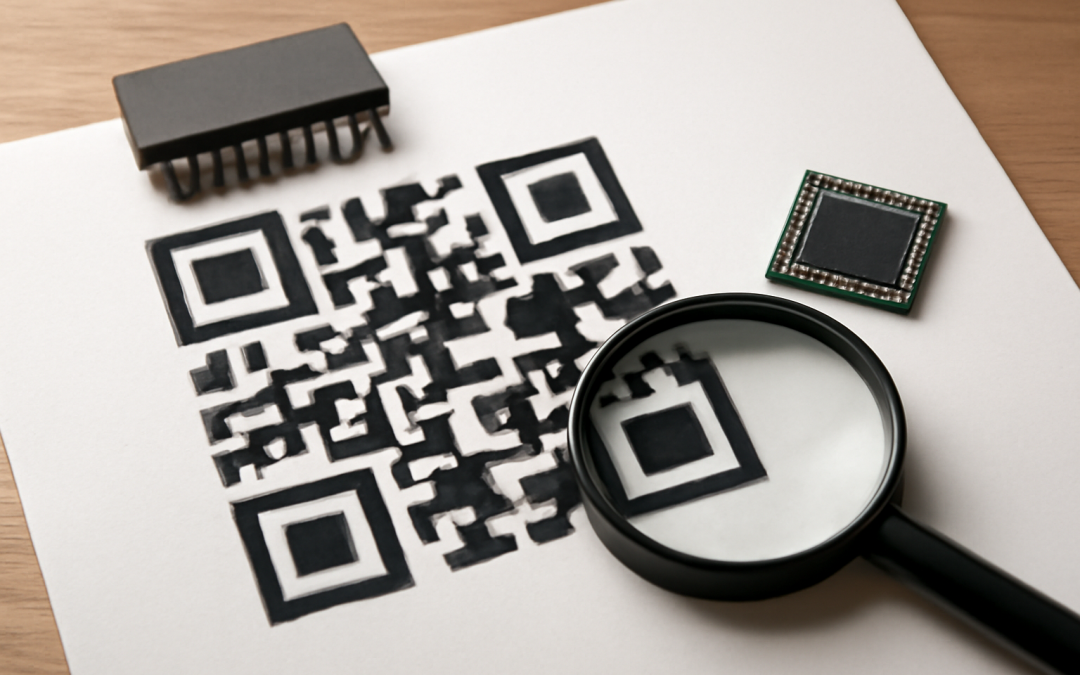
For most people, QR codes have become a familiar sight in daily life—from restaurant menus and retail promotions to event ticketing and contactless payments. Despite their widespread use, the underlying mechanisms that allow these small, square patterns to store and convey a wealth of information remain largely a mystery to many. Understanding how QR codes store information delves into the realms of digital encoding, error correction, and spatial arrangement, revealing a sophisticated system built for efficiency, reliability, and versatility.
At its core, a QR code is a type of two-dimensional barcode designed to store data in both horizontal and vertical directions. Unlike traditional barcodes, which can only contain information in one dimension (usually a series of lines), QR codes leverage a matrix of square modules to encode significantly larger amounts of information in a compact space. These modules are tiny black and white squares arranged on a grid, and the pattern they form directly represents the encoded data.
The process of how QR codes store information begins with data encoding. The data—whether it’s a URL, text, or other characters—is first converted into a binary format. This means that each piece of information is transformed into a string of 0s and 1s, which can then be mapped onto the QR code’s grid structure. However, it’s not as simple as translating each bit of data into an individual module. Instead, QR codes employ a carefully defined encoding scheme that optimizes both space and readability.
There are several modes of encoding available within the QR code standard, including numeric, alphanumeric, byte/binary, and Kanji, each optimized for different types of data. Numeric mode, for instance, stores numbers compactly by representing three digits with 10 bits, whereas alphanumeric mode can encode letters and some special characters using fewer bits than the byte mode, which supports the entire ISO-8859-1 character set. Choosing the appropriate mode influences how efficiently information is stored and affects the final QR code’s size and complexity.
Once the data is encoded, it’s structured into codewords—units composed of 8 bits each. These codewords are then arranged in a specific pattern within the QR code matrix according to standardized placement rules. Data placement ensures that the encoded information is distributed evenly across the QR code, which helps improve the symbol’s resistance to damage or distortion.
Error correction plays a crucial role in the QR code’s robustness and reliability. QR codes utilize Reed-Solomon error correction algorithms to generate redundant bits that protect the data from errors caused by dirt, damage, or misalignment. This redundancy allows a QR code to be scanned and accurately decoded even if a portion of the code is obscured or missing. There are four levels of error correction—Low (7%), Medium (15%), Quartile (25%), and High (30%)—each dictating the percentage of the code that can be restored if damaged. Selecting a higher level of error correction reduces the data capacity but increases durability.
The QR code’s structure also incorporates several fixed patterns that aid in accurate scanning and decoding. The three large squares found in three corners of the QR code serve as position detection patterns, helping the scanner identify the code’s orientation. Smaller alignment patterns, timing patterns, and format information areas are integrated throughout the matrix to further assist the decoding process. These patterns are essential because they allow scanning devices to quickly locate the QR code, correct any distortion, and decipher the encoded data correctly.
In addition to encoding data and error correction, QR codes also contain version information that indicates the size of the code and the data capacity. There are 40 standard versions of QR codes, ranging from Version 1 with a 21×21 module matrix to Version 40 with a 177×177 module matrix. A larger version can store more information but results in a more complex visual pattern. The version information is stored in fixed locations within the code and helps scanners anticipate how to interpret the data.
The efficiency of how QR codes store information is remarkable, especially considering their size. A standard QR code can hold up to 4,296 alphanumeric characters or up to 7,089 numeric characters, depending on factors like the error correction level and version. This capacity makes QR codes suitable for a wide range of applications, from simple web URLs to complex datasets like Wi-Fi authentication credentials, product details, contact cards, and even encrypted information.
Decoding a QR code involves several steps that mirror the encoding process in reverse. Scanners first detect the position, alignment, and timing patterns to determine the orientation and grid layout. Then, the scanner reads the modules according to the placement pattern, extracting the bits from the matrix. Error correction algorithms examine the extracted bits, correcting any detected errors using the redundant codewords, before finally reconstructing the original data. The decoded information is then often interpreted by an application or browser, making the data instantly accessible to users.
One fascinating aspect of how QR codes store information is their adaptability. The encoding process is flexible enough to incorporate various types of data, change sizes for capacity needs, and adjust error correction levels for resilience. This flexibility is also evident in micro QR codes and model variants tailored for specific uses, allowing for extremely small or customized QR codes while retaining the core encoding principles.
The rise of smartphones equipped with cameras and powerful processing capabilities has dramatically increased the utility of QR codes. These devices can scan and decode QR codes almost instantaneously, facilitating contactless interactions that are both fast and secure. Behind this simple interaction lies the sophisticated information storage system that meticulously balances data density, scan reliability, and robustness.
In an era increasingly driven by the digital exchange of information, the ability of QR codes to store and convey data quickly and accurately has become indispensable. Their design leverages advanced coding theory and error correction to maximize information storage while maintaining ease of use. As technology continues to evolve, QR codes remain a testament to how clever encoding and smart design can transform how we access and share information in everyday life.
Understanding the mechanics of information storage in QR codes not only elucidates why they are so reliable and effective but also opens the door to appreciating the innovative engineering behind a seemingly simple black-and-white square. Their capacity to encapsulate complex data efficiently, withstand damage, and be used universally makes QR codes a powerful tool in the digital communication landscape.
The ingenuity behind how QR codes store information lies in the seamless intersection of mathematics, computer science, and practical design. As industries continue to adopt QR code technology more broadly, the principles behind their information storage ensure that they will remain a cornerstone of quick, reliable data exchange for years to come.