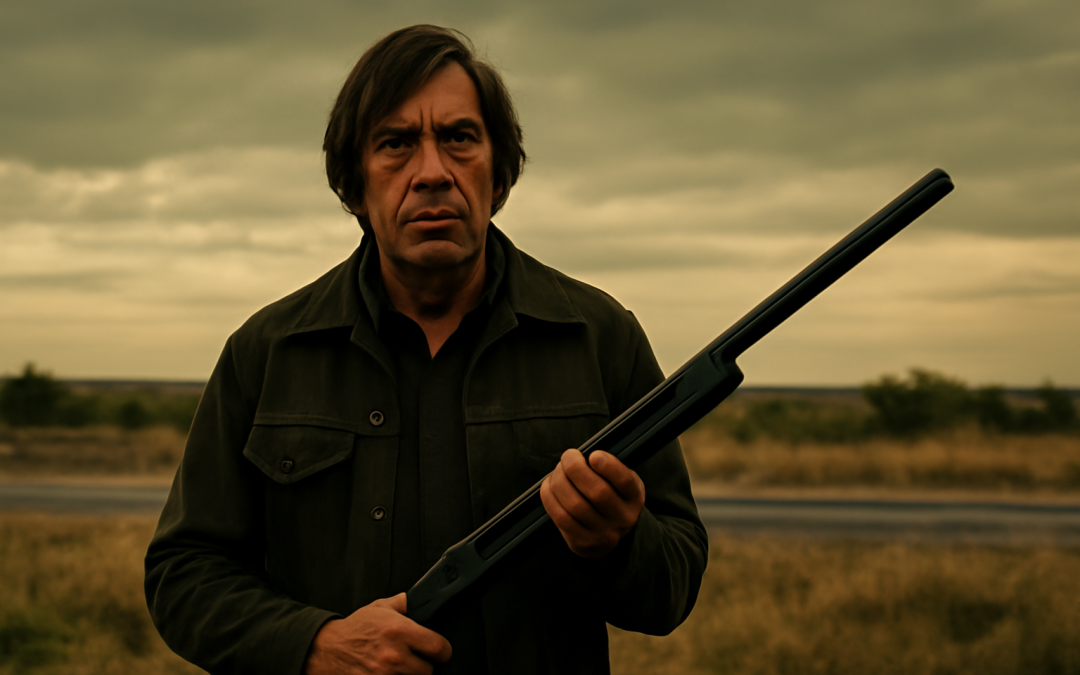
The Coen brothers’ adaptation of Cormac McCarthy’s novel presents a chilling exploration of fate, morality, and the relentless unpredictability of life. At its core, No Country for Old Men challenges the audience’s perception of justice and inevitability, weaving a narrative that eschews clear-cut heroes and villains. This cinematic experience lingers long after the credits roll, with its unforgiving atmosphere and sparse dialogue underlining a world where mercy is a scarce commodity and fate holds no allegiance to righteousness.
From the very first frame, the film immerses viewers in the desolate landscapes of the Texas-Mexico border, setting the tone for a story that is both intimate and epic. The arid backdrop reflects the starkness of the characters’ lives and the merciless nature of the events that unfold. The barren deserts and small towns seem to exist in their own time, detached from modern sensibilities yet rife with an undercurrent of violence and primal survival. This visual environment does more than just frame the story—it becomes a character itself, emphasizing the lawlessness and loneliness that define the world these people inhabit.
The narrative centers on three primary figures whose paths cross through a series of brutal events triggered by a drug deal gone awry. Llewelyn Moss, a man who stumbles upon a suitcase filled with two million dollars, embodies a flawed but compelling form of courage. His decision to take the money sets off a cat-and-mouse chase that drives the plot and reveals the fragility of human plans when confronted with the caprices of chance and fate. Moss’s practical intelligence and rugged independence are no match for the inexorable forces that pursue him, making his predicament a stark meditation on human hubris and vulnerability.
Contrasting Moss’s earthy pragmatism is Anton Chigurh, a hitman whose chilling moral code is governed by an inscrutable sense of fate and arbitrary justice. Chigurh’s presence injects a terrifying unpredictability into the story—his choices are often determined by the flip of a coin, underscoring the film’s fixation on chance as a determinant of life and death. His relentless pursuit is not merely professional; it is existential, emphasizing the film’s theme of an uncaring universe where outcomes can hinge on randomness rather than human control or planning. Javier Bardem’s portrayal is nothing short of iconic, his cold demeanor and imposing silence making Chigurh one of cinema’s most memorable antagonists.
Meanwhile, Sheriff Ed Tom Bell represents a fading world and the human struggle to comprehend the evil that seems to multiply beyond his grasp. Bell’s introspective philosophy and visible weariness add a reflective layer to the story, as he grapples with the erosion of traditional values and an increasing sense of personal and societal helplessness. His role as a moral compass is complicated by his inability to prevent or fully understand the chaos, making him a poignant symbol of aging courage confronted by the incomprehensible forces of cruelty and fate. His character elevates the film from a standard thriller into a broader contemplation of generational shifts, justice, and morality.
The film’s pacing is deliberate and unrelenting, eschewing melodramatic confrontations in favor of tense, quiet moments filled with anticipation. Dialogue is minimal but loaded with meaning, allowing the uncomfortable silences to heighten the sense of dread. The Coens masterfully deploy suspense through these gaps, a technique that places viewers uncomfortably close to the raw reality of the characters’ peril. The absence of excessive exposition demands active engagement and deepens the narrative’s psychological complexity.
Cinematographer Roger Deakins’ work deserves special mention for significantly enhancing the film’s oppressive atmosphere. The stark lighting choices and wide, desolate shots emphasize isolation and vulnerability, while close-ups capture fleeting human emotions with brutal clarity. The visual style carefully balances beauty and horror, drawing viewers into a world simultaneously majestic and merciless. Deakins’ ability to infuse the harsh landscapes with a poetic quality enhances the tension, making the environment a silent witness to the unfolding violence.
Musically, the film is strikingly understated. Instead of an intrusive score, the soundtrack is mostly void of music, allowing natural sounds—wind, footsteps, the crack of gunfire—to dominate. This choice heightens realism and makes moments of violence even more shocking. The silence becomes a sonic representation of the vacancy left by lost innocence and the pervasive obscurity that surrounds the characters’ fates. This restraint in sound design contributes to a storytelling style that trusts the power of imagery and performance over conventional manipulations of the audience’s emotions.
No Country for Old Men also stands out for its refusal to conform to traditional narrative structures, especially in its conclusion. Rather than providing neat resolutions or clear moral judgments, the story closes with an ambiguous undertone that challenges viewers to reflect on the implications of the characters’ journeys. This open-ended finale mirrors the film’s thematic insistence that life—much like fate—is arbitrary and often unforgiving. The Coen brothers’ choice to leave major questions unanswered elevates the film from mere entertainment into a haunting meditation on existential uncertainty.
At the heart of the film’s philosophical inquiry is the concept that fate operates without mercy, indifferent to human desires or ethical considerations. This worldview permeates every scene, shaping characters’ actions and the story’s unfolding tragedy. The often random and cruel outcomes highlight a stark contrast with the traditional narrative justice found in many crime dramas. Instead, here, the universe is indifferent, and the relentless pursuit by Chigurh represents the inexorability of fate itself—an agent of chaos rather than order.
The film also explores the notion of identity and survival in a shifting moral landscape. Llewelyn Moss tries to assert control over his circumstances, but the violent forces that assert their presence show the limits of individual will. Anton Chigurh, conversely, is an agent of nihilistic determinism, operating beyond standard ethics and embodying an unstoppable force. Meanwhile, Bell’s introspection offers a lament for a past where justice seemed more tangible, suggesting that the moral certainties of previous generations have become obsolete. This intergenerational tension adds depth to the film’s meditation on the erosion of old values in the face of newer, harsher realities.
The film’s characters are not heroes in any conventional sense but rather representations of competing philosophies facing an indifferent world. This moral ambiguity is a critical aspect of the film’s impact, prompting viewers to question their instinctive reactions and the nature of justice itself. The apparently arbitrary violence calls into question the assumptions about good and evil, right and wrong, pushing audiences to confront uncomfortable truths about existence and human nature.
The nuanced performances throughout contribute significantly to the film’s power. Tommy Lee Jones brings gravitas to Bell’s character, evoking empathy for a man out of time. Josh Brolin’s Moss is gritty and determined, populating the world with quiet desperation. Bardem’s almost supernaturally cold Chigurh unsettles and fascinates simultaneously, embodying the inescapable cruelty that governs the story. Together, these performances create a tableau in which fate’s impersonal hand is palpably felt through the layered human responses to terror and uncertainty.
The Coen brothers’ direction is precise and restrained, avoiding sensationalism while maintaining a palpable tension throughout. Their ability to balance the film’s philosophical weight with the mechanics of a thriller showcases their skill in storytelling. Every frame is carefully composed to support the narrative’s bleak themes, and their focus on character-driven storytelling ensures that even amidst violence and chaos, deeply human stories remain central.
No Country for Old Men ultimately challenges viewers to reconsider their assumptions about control, justice, and destiny. It functions not just as a crime thriller, but as a meditation on a world where old rules no longer seem to apply and where fate operates with ruthless impartiality. The film’s stark imagery, haunting performances, and philosophical depth ensure that it remains an unforgettable cinematic achievement, one that forces an unsettling confrontation with mortality and chance.
In examining the relentless and unforgiving nature of fate, the narrative suggests that mercy is a luxury in short supply and perhaps irrelevant to the cosmic order. The characters’ attempts to exercise free will meet with varying degrees of failure, exposing the limits of human agency against an impersonal universe. This sobering realization gives the film its haunting resonance, making it not just a story about crime and pursuit, but a profound reflection on life itself.
Enduring in its intensity and thematic richness, the film is a testament to filmmaking that respects the intelligence and emotional complexity of its audience. It refuses easy answers and instead demands contemplation, rewarding viewers who engage with its challenging questions. In a cinematic landscape often dominated by clear-cut victories and moral certainties, this film stands apart as an unflinching portrayal of the merciless hand of fate.