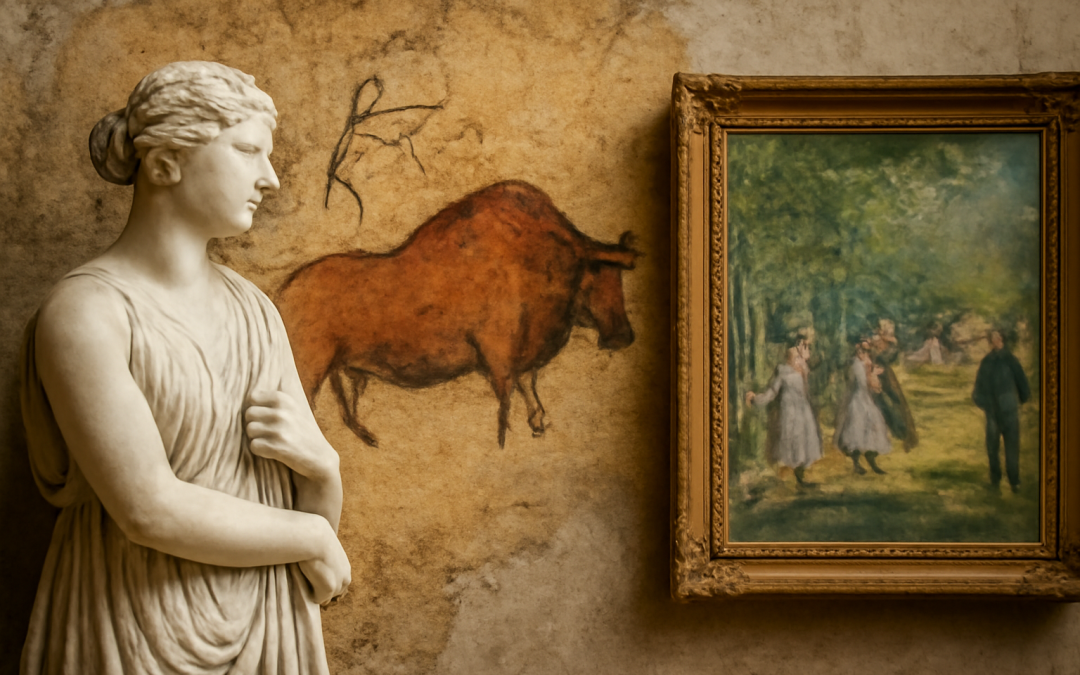
Art is an essential cornerstone in the foundation and evolution of human societies. It acts as a mirror reflecting the values, beliefs, and experiences of a culture while simultaneously serving as a powerful agent for transformation. Over the centuries, creative expression has influenced how communities view the world and themselves, thereby shaping cultural identity in ways both subtle and profound. The interplay between art and culture is dynamic; as culture evolves, so too do artistic expressions, and in turn, these expressions help define the direction and nature of cultural change. This cyclical relationship ensures that art is not only a product of its time but also a catalyst for future cultural development.
The earliest forms of artistic expression—cave paintings, carvings, and rudimentary sculptures—offer rich insight into the cultures of prehistoric eras. These artifacts reveal how early humans communicated their experiences and understood their environment. Such creations were not merely decorative but served spiritual, educational, and communal functions. By creating symbolic images and narratives, these early artists helped establish shared meanings and values across groups, reinforcing collective identity and continuity. This illustrates that art’s influence on culture stretches back to humanity’s very origins, underscoring its role in uniting people through shared stories and belief systems.
As civilizations advanced, the relationship between art and culture became increasingly complex and intertwined. The art of ancient societies such as Mesopotamia, Egypt, Greece, and Rome was deeply embedded in their religious and political frameworks. Monumental architecture, intricate frescoes, and detailed sculptures commemorated gods, rulers, and historical events, embedding cultural values into the physical landscape and public consciousness. For example, the grandeur of the Parthenon in Athens conveyed ideals of beauty, democracy, and intellectual achievement that defined Greek culture. This highlights how art served as a medium for reinforcing dominant ideologies and social structures, shaping collective identity and guiding cultural legacy.
Throughout history, art has also functioned as a means of resistance and social commentary. In periods of oppression or upheaval, artists have used their work to challenge prevailing power structures, question societal norms, and give voice to marginalized communities. The Renaissance period experienced a revival of classical ideals that simultaneously embraced humanism while subtly critiquing existing religious dogmas and political authority. Similarly, the modern era has seen movements like Dadaism and Surrealism reject traditional aesthetics and expose the absurdities of war, industrialization, and consumerism. In this capacity, art contributes to cultural evolution by prompting reflection, dialogue, and, ultimately, change.
Cultural identity is continuously redefined through the arts, particularly as communities encounter and interact with other cultures. The cross-fertilization of artistic ideas, styles, and mediums across continents has shaped global cultural landscapes. For instance, the influence of African art on European Modernism added vibrant new perspectives and techniques that challenged Western artistic conventions. This exchange fosters a broader, more inclusive understanding of culture, highlighting diversity while encouraging innovation. Through such intercultural dialogue, art becomes a bridge that connects different peoples, facilitating empathy and greater cultural awareness.
Art also plays a crucial role in preserving cultural heritage and memory. Traditions passed down through visual arts, music, dance, and storytelling maintain a community’s link to its roots, especially in the face of rapid modernization and globalization. Indigenous art forms, for example, carry centuries of ancestral knowledge and cosmological beliefs, serving as visual archives that safeguard identity and history. Museums, galleries, and cultural institutions then become custodians of this heritage, interpreting and disseminating it to wider audiences. By doing so, art helps sustain cultural pride and continuity while allowing future generations to understand and appreciate their lineage.
In the contemporary world, technology has transformed how art is created, distributed, and consumed, introducing new possibilities for cultural expression. Digital media, virtual reality, and global connectivity dissolve geographic boundaries, enabling instant sharing and collaboration among artists worldwide. This democratization of art production broadens cultural narratives by incorporating diverse voices and perspectives often excluded from mainstream discourse. Nevertheless, it also raises questions about cultural appropriation, the commercialization of cultural symbols, and the authenticity of artistic expression. These challenges underscore the ongoing negotiation between creativity and cultural respect.
The arts also influence social behavior and collective consciousness by shaping public spaces and experiences. Urban murals, performance art, and interactive installations engage communities directly, fostering participation and a sense of belonging. Such works frequently address social issues like injustice, environmental degradation, or inequality, turning art into a form of activism and social intervention. By activating public engagement, art alters cultural norms and values from the grassroots level, prompting communities to reconsider their priorities and relationships. This bottom-up influence of art on culture highlights its capacity to inspire real-world change beyond aesthetic appreciation.
Education systems play a significant role in embedding art within cultural development by nurturing creativity and critical thinking. Exposure to art encourages individuals to explore different worldviews, develop empathy, and appreciate cultural diversity. This educational function is essential for preparing future generations to participate meaningfully in a cultural continuum that is ever-changing. Institutions that support artistic learning serve as incubators for culture, ensuring that the arts remain a living and evolving entity that responds to contemporary challenges and aspirations.
Moreover, economic factors often shape the production and reception of art, and by extension, culture itself. Patronage from wealthy individuals or institutions, government funding, and commercial markets influence which artistic expressions thrive and which do not. While financial support can elevate cultural practices, it can also impose limitations or biases aligned with prevailing interests and ideologies. Understanding this relationship is crucial to recognizing the political economy of culture, wherein power dynamics can shape cultural narratives and access. Balancing artistic freedom with economic realities remains a persistent challenge in nurturing a vibrant cultural ecosystem.
As societies face globalization, migration, and technological disruption, art continues to be an essential tool for navigating identity and cultural continuity. Diasporic communities use art to maintain connections with their homeland while adapting to new environments, creating hybrid cultural forms that reflect both tradition and innovation. These evolving identities demonstrate that culture is not static but fluid and multifaceted. Artistic expression, therefore, serves as a living dialogue between past and present, local and global, individual and collective, constantly reshaping cultural meaning.
Ultimately, art’s influence on culture transcends mere aesthetics or entertainment—it is a vital force that shapes how societies construct meaning, understand their place in the world, and envision their futures. By engaging with art, individuals and communities participate in a process of cultural formation that blends history, identity, politics, and aspiration. This ongoing interplay ensures that culture remains a dynamic, living phenomenon, continually shaped by human creativity and imagination. Through its power to inspire, provoke, challenge, and connect, art remains indispensable in shaping the human experience across time and space.