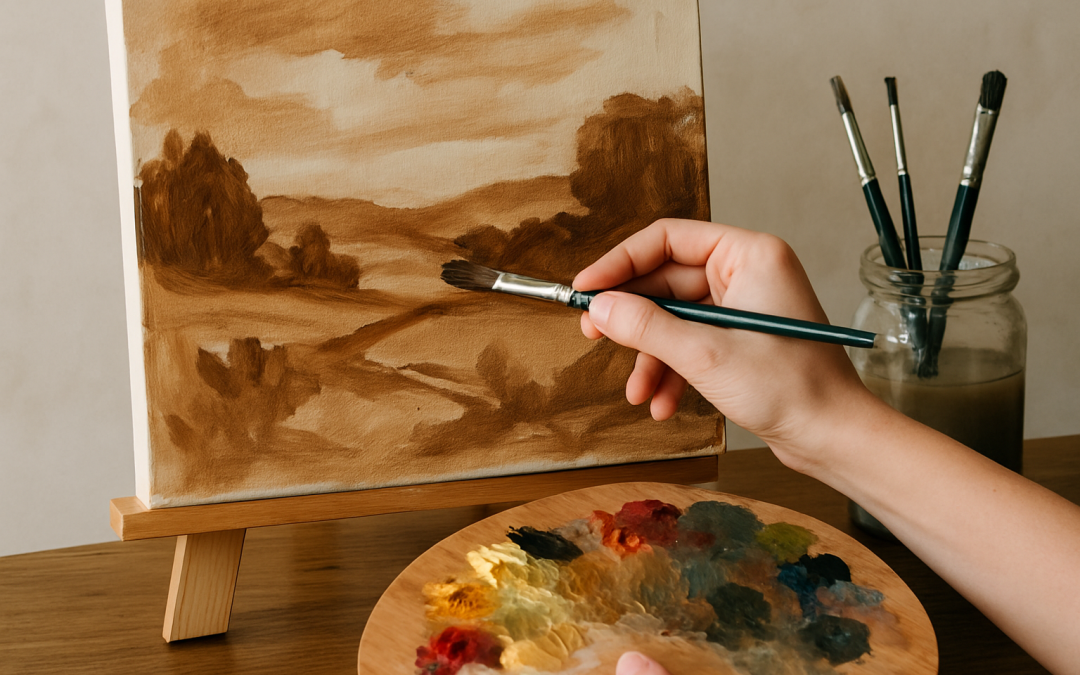
Creating a successful painting involves much more than simply applying pigment to canvas. One of the foundational steps that many artists rely on to develop depth, structure, and coherence in their work is the use of an underlayer that guides the rest of the composition. This phase, often referred to as underpainting, serves as a crucial blueprint from which the painting evolves. Employing deliberate underpainting strategies can significantly influence the visual impact and technical quality of the final artwork, providing a solid groundwork that enhances detail, color, and light.
The first step in developing an effective underpainting is deciding the purpose it will serve within the greater process of your painting. Underpainting traditionally functions as an initial tonal sketch that focuses on values—lights, midtones, and darks—before color is introduced. This helps artists establish the overall composition and balance of their work before layering complex hues. Alternatively, underpaintings can be used to create color harmonies or to provide a textured foundation that interacts dynamically with subsequent layers. Understanding the specific goal behind your underpainting will inform important decisions such as choice of medium, color, and technique.
Drawing upon the strength of monochrome, many artists begin with a grisaille underpainting—a method that uses shades of gray or another single neutral color to sketch out the forms and lighting. This approach illuminates the structural nuances of the subject matter without the distraction of color, allowing the artist to focus exclusively on light, shadow, and volume. Because this mode revolves around value contrasts, it creates a strong visual hierarchy that frames the entire composition. Artists who master this method often find that the later application of color, either through transparent glazes or more opaque layers, interacts effectively with the underlying shapes and enhances the dimensionality of the painting.
Another widely adopted strategy incorporates a complementary color scheme as the basis for the underpainting. For example, using burnt sienna or a shade of red-orange can provide warm undertones when overlaid with cool color glazes, or vice versa. This tactic adds vibrancy and visual interest to the final piece; the sheen of the top layers allows the warmth or coolness of the underpainting to subtly show through, contributing to a rich, complex color temperature. The interplay of warm and cool tones, facilitated by the complementary underlayer, often results in paintings with greater depth and life than those executed purely through flat color applications.
Oil painters frequently take advantage of the medium’s slow drying time to build underpaintings with thin, transparent layers. This technique, known as glazing, is a classical strategy that stems from the Renaissance masters and the Old Masters who prioritized luminosity and color subtlety. An initial underpainting executed in thin washes of pigment can define volume and light direction, after which the artist gradually layers glazes of colored oil paint. This results in a gentle diffusion of color and light that can be remarkably lifelike, as each transparent layer modifies the appearance of the ones beneath, creating nuanced tonal shifts and an irresistible glow.
For artists working in acrylic, underpainting strategies may differ slightly but hold comparable value. Acrylic paints dry much faster than oils, meaning fast-drying underlayers can be achieved with ease, enabling artists to quickly move to subsequent layers. Acrylic underpaintings often emphasize bold contrasts and shapes rather than subtle tonal gradations, setting a sturdy foundation for color blocking and detail work. Additionally, acrylic mediums can be mixed to control opacity, allowing underlayers to peek through applied colors similarly to glazing techniques in oils. This approach brings flexibility and speed to the workflow, which is beneficial for creating lively and dynamic paintings in a range of styles.
In some cases, artists choose to build an underpainting using textured or impasto techniques. By applying thick layers of paint or using special tools to create raised surfaces during the underpainting phase, the final work gains tactile depth and visual interest. These textures can catch and reflect light differently across the surface and influence the way subsequent layers of paint behave. For example, a rough underpainting layer might cause thinner, more transparent top layers to pool unevenly, adding complexity to the final image. This strategy is particularly useful when artists want to emphasize expressive brushwork or incorporate physicality alongside visual elements.
A classic underpainting method applicable to many styles is the verdaccio technique, developed during the Italian Renaissance. It uses a muted greenish-gray base layer, typically composed of black, white, and a touch of yellow ochre or green. The verdaccio serves as a mid-value grounding tone that helps artists carefully render form and shadows, especially in portraits. The greenish undertone is also particularly effective for painting flesh tones, making it easier to build naturalistic skin hues on top. This subtle strategic choice demonstrates how carefully selected underpainting colors can simplify complex color mixing challenges later in the process.
In addition to traditional oil and acrylic supports, some contemporary artists experiment with mixed media underpainting strategies. Incorporating charcoal, ink washes, or even textured papers into the early stages can add spontaneous lines, patterns, or tonal variations that enrich the creative narrative. For example, starting with a charcoal sketch fixed on the canvas can lend energetic mark-making beneath layers of paint. Using ink wash underpaintings provides a dynamic range of midtones and shadows in a fluid, gestural manner. Mixed-media approaches invite creative exploration, making the underpainting phase not only functional but integral to the expression and concept of the painting.
Lighting plays a critical role in how underpainting strategies unfold. Artists must consider the direction, quality, and intensity of light in their compositions because this influences the tonal structure from the very beginning. The underpainting should capture the primary shadows and highlights convincingly to build a believable sense of three-dimensionality. When the light source is well-defined, the underlayer anchors the painting’s spatial coherence, making it easier to add complex color layers that maintain consistency throughout. On the other hand, ambiguous or diffuse lighting might call for subtler value gradations in the underpainting to preserve a soft and atmospheric effect.
Selecting the right brushes and tools also deeply impacts the effectiveness of an underpainting. Broad, flat brushes are often favored for covering large areas quickly and creating smooth, even tones while detail brushes are reserved for smaller forms and edges. Palette knives can be used both for textural marks in the underlayer and for scraping paint to reveal underlying tones, adding to the compositional complexity. Experimenting with these tools during the underpainting phase can reveal unexpected surface qualities and help artists develop a tactile vocabulary that influences the final painting’s character.
Incorporating a preliminary drawing into the underpainting is another essential practice. Many artists start with a rough sketch directly on their support, using pencil or charcoal, to layout the composition. This drawing is then either incorporated seamlessly into the underpainting or wholly painted over as the tonal values are established. This preliminary groundwork is not just a technical step but a conceptual process where the artist refines ideas about form, proportion, and balance. The underpainting thereby becomes a harmonic fusion of drawing and painting, blending structural precision with painterly fluidity.
One challenge frequently encountered with underpaintings is ensuring that the layers above adhere properly and interact as expected. Preparation of the painting surface is crucial; applying a suitable ground, such as gesso or an acrylic primer, creates the right texture and absorbency. Additionally, artists must consider the fat-over-lean rule, especially in oil painting, to prevent cracking or detachment. The underpainting is typically leaner—meaning it contains less oil—and subsequent paint layers are “fatter” or more flexible. Sensitivity to these chemical and physical properties ensures the longevity of the artwork and that the underpainting remains an effective underpinning rather than a potential point of failure.
Another significant benefit of employing sophisticated underpainting strategies is the enhanced ability to manipulate mood and atmosphere. By carefully selecting the tonal range and initial color temperatures, artists can imbue their work with emotional resonance from the outset. A dark, moody underpainting can cast a sense of mystery or intimacy over the entire composition, while a brighter, more open tonal base might suggest optimism and energy. The underpainting stage, therefore, becomes a powerful expressive tool that guides not just the technical execution but also the psychological tone of the painting.
Artists who specialize in portraiture highlight the role of underpainting as foundational to achieving lifelike skin textures and subtle expressivity. In many cases, painters build the underpainting up slowly to capture the planes of the face in nuanced detail. This may involve blending smooth gradations and transitions between light and shadow to replicate flesh’s softness. The underpainting sets the framework for subsequent glazing or scumbling techniques that add warmth, transparency, and vibrance. Without this precise groundwork, it is very challenging to reach the level of realism and vitality that portraits demand.
Still life and landscape painters also find immense value in underpainting, though their approaches may differ. Landscapes often benefit from underpaintings that emphasize atmospheric perspective and value contrasts between foreground, middle ground, and background. These tonal distinctions give a sense of depth and spatial organization that grounds the evolving layers. Still lifes might rely heavily on complementing the underpainting’s tonal values with color temperature contrasts designed to enhance the objects’ material properties, whether glass, metal, or fabric. In both genres, a well-crafted underpainting elevates the artist’s ability to capture light and detail convincingly.
In contemporary art, where abstraction and experimentation thrive, underpainting strategies are often pushed beyond traditional boundaries. Some artists use underpaintings to explore gestural mark-making or to introduce unexpected color contrasts that disrupt classical composition rules. The underpainting may serve as a counterpoint or even an independent layer visible through translucent paint, adding conceptual depth. This approach reflects current art’s tendency to blur the lines between process and product, where underpainting is not just a preparatory step but an active part of the artwork’s dialogue.
The educational value of underpainting strategies cannot be overstated, especially for emerging artists and students. Learning to see and render values accurately through a focused underpainting phase builds essential observational skills that improve overall painting proficiency. It encourages patience and consideration for structure, teaching artists to think critically about light, form, and spatial relationships before becoming absorbed by color. This methodological approach lays a strong foundation for growth and development that benefits skills across all painting styles and mediums.
Ultimately, mastering underpainting strategies allows for greater control over the painting process. Artists gain the ability to resolve challenges early—correcting compositional imbalances, refining value relationships, and experimenting with color undertones—before committing to final layers. This preemptive refinement reduces the risk of costly errors and fosters confidence, enabling painters to work more intuitively and fluidly afterward. The underpainting becomes a quiet but powerful guide, a visual roadmap that steers the artwork from conception to completion with greater clarity and purpose.
Incorporating underpainting techniques also opens up exciting possibilities for creative variation. By altering the color or value scheme of the underlayer, an artist can explore multiple moods or atmospheres for the same composition, broadening creative potential. It can also serve as a means of experimentation, offering a risk-free way to test compositions or tonal arrangements without investing the time and effort required for full-color work. This strategic flexibility makes underpainting a valuable tool for professional painters and hobbyists alike, ensuring that each artwork has a strong foundation that supports artistic intentions and expression.
In conclusion, the thoughtful application of underpainting strategies enriches the painting process by adding structural integrity, tonal precision, and expressive depth. Far from being a mere preparatory step, underpainting shapes the very essence of the artwork, influencing its texture, color dynamics, and atmospheric quality. Whether employing classical monochrome techniques, complementary color layering, textural elements, or modern mixed media, artists benefit immensely from this foundational approach. Developing proficiency in underpainting fosters greater artistic control and heightened visual impact, making it an indispensable part of the painter’s toolkit.