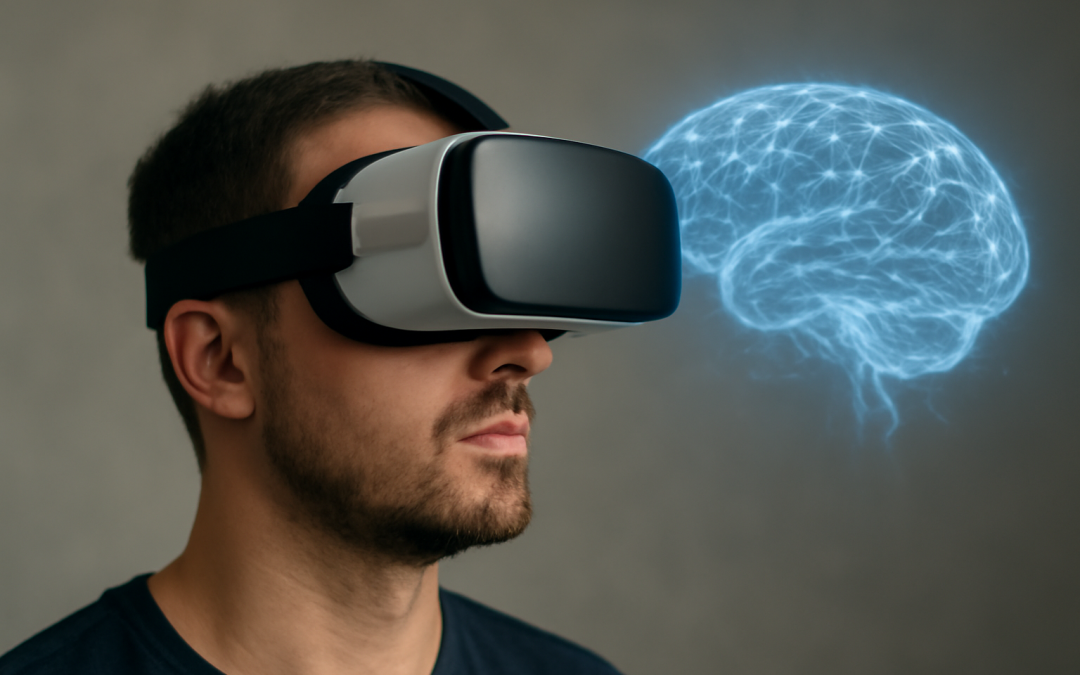
Virtual reality (VR) technology has quickly evolved from a niche entertainment medium to a powerful tool employed across various fields, including education, healthcare, and professional training. As users immerse themselves in these simulated environments, questions arise about how this technology interacts with the human brain. Understanding how VR affects the brain is crucial not only for maximizing its benefits but also for mitigating potential risks. The experience of being ‘inside’ a digital world engages multiple sensory and cognitive systems, and the brain’s response to such immersive stimuli reveals both fascinating adaptability and complex neurological processes.
At the core of VR’s impact on the brain lies its ability to create a compelling illusion of presence—a sensation that the user genuinely “exists” within the virtual environment. This sensation is made possible through a combination of visual, auditory, and sometimes haptic feedback, which tricks the brain into perceiving virtual objects and scenarios as real. Studies employing neuroimaging techniques such as functional MRI and EEG have shown that when immersed in VR, brain regions responsible for spatial navigation, sensory processing, and motor control become highly active. Particularly, the parietal lobes, which help integrate sensory input and manage spatial awareness, show heightened connectivity, allowing users to orient themselves effectively within these artificial worlds.
Moreover, the immersive nature of VR can engage the brain’s mirror neuron system, which is essential for empathy and learning. When users observe actions or emotions within VR environments, they may experience vicarious feelings or behaviors, simulating real-world social interactions. This phenomenon has paved the way for therapeutic applications, such as treating social anxiety or post-traumatic stress disorder (PTSD), where patients can safely confront difficult scenarios in controlled virtual settings. The adaptability of the brain’s neural networks during VR exposure underlies these therapeutic benefits by promoting neural plasticity—the capacity to reorganize and form new connections in response to experience.
However, the intense sensory stimulation provided by VR also poses challenges to the brain, especially during prolonged use. One well-documented phenomenon is “cybersickness,” a form of motion sickness induced when visual input suggests movement that the body does not physically experience. This sensory conflict causes discomfort, dizziness, nausea, and disorientation. Neurologically, this effect arises because the brain’s vestibular system, responsible for balance and spatial orientation, receives conflicting information from the eyes and inner ear. Although some users adapt quickly, others remain more sensitive, and the underlying mechanisms involve brain regions like the insular cortex, which processes interoceptive signals related to bodily awareness.
Beyond immediate sensory effects, VR can influence cognitive processes such as attention, memory, and learning. Immersive environments often demand focused attention as users navigate complex virtual spaces or interact with digital objects. Research suggests that VR can enhance learning outcomes by providing experiential and context-rich stimuli that bolster memory consolidation. This is particularly evident in educational applications where students retain information better when engaged in VR scenarios compared to traditional teaching methods. The cognitive benefits stem from VR’s activation of multiple sensory modalities and the engagement of working memory systems housed primarily in the prefrontal cortex and hippocampus.
On the flip side, excessive exposure to VR could potentially overstimulate the brain or disrupt normal cognitive rhythms. Some studies indicate that prolonged VR sessions might lead to temporary changes in brain wave patterns, particularly increased theta activity, which is associated with drowsiness or reduced alertness. These alterations might affect task performance and could even impair learning if immersion is not appropriately managed. Furthermore, VR environments that are overly stimulating or poorly designed could provoke cognitive fatigue or hinder executive functioning, highlighting the brain’s delicate balance between engagement and overload.
Emotional responses triggered by VR immersion also offer insight into how it influences the brain’s affective systems. Because VR can simulate environments that evoke intense emotions—ranging from fear in a horror game to awe in an exploration of natural landscapes—it activates the limbic system, including the amygdala and hippocampus. These structures regulate emotional reactions and memory formation, respectively. Therapeutic VR applications leverage this ability to modulate emotions and retrain maladaptive responses, such as in exposure therapy for phobias or mood regulation techniques. Conversely, frequent exposure to highly arousing virtual stimuli without adequate coping mechanisms may contribute to stress or emotional desensitization over time.
Social cognition—the brain’s capacity to understand and respond to social cues—is another domain affected by VR. When users interact with avatars or virtual characters, their brains engage networks responsible for theory of mind, empathy, and social behavior. Studies reveal that realistic virtual interactions activate the temporoparietal junction and medial prefrontal cortex, areas involved in attributing mental states to others. This has significant implications for VR’s use in social skills training, particularly for individuals on the autism spectrum or those with social deficits. However, overreliance on virtual socialization could potentially alter real-world social behaviors or reduce the motivation for face-to-face interactions, although further longitudinal research is necessary.
Motor functions and sensorimotor processing are deeply influenced by VR’s immersive capabilities as well. When users perform actions within VR—such as reaching, walking, or manipulating objects—the brain’s motor cortex and cerebellum engage to coordinate movement and predict sensory outcomes. This sensorimotor integration supports the development of body ownership illusions, where users feel their virtual avatar’s body is part of their own. The neural mechanisms involved are of great interest in neurorehabilitation, as VR can simulate real-world tasks and encourage motor recovery following events like stroke. The adaptability of the sensorimotor system in VR demonstrates the brain’s remarkable capacity for recalibrating perceptual and motor maps according to new contexts.
Adjustments in sensory perception extend beyond vision and motor coordination in VR settings. Auditory cues, delivered through spatialized sound systems, enhance the brain’s immersion by engaging the auditory cortex and integrating multisensory inputs. Additionally, some advanced VR platforms provide tactile or haptic feedback that stimulates the somatosensory cortex, enhancing realism and interaction quality. This multisensory stimulation can lead to changes in sensory gating, where the brain selectively filters out irrelevant stimuli, thus sharpening user focus on salient virtual elements. However, this increased sensory load could challenge individuals with sensory processing disorders or heightened sensitivity.
Memory systems are particularly engaged in VR, given that users often navigate unfamiliar environments or interact with novel objects that require encoding and retrieval. The hippocampus, a critical brain structure for spatial and episodic memory, supports these processes by forming detailed mental maps and contextual associations. Studies have demonstrated that VR training can enhance spatial memory and cognitive mapping, beneficial not only in gaming but also in navigation skills for the elderly or cognitively impaired. Additionally, VR experiences can produce vivid autobiographical memories due to the high level of engagement and sensory realism, further reinforcing the brain’s encoding mechanisms.
It is important to consider individual differences in brain responses to VR, as factors such as age, cognitive status, and prior experience influence how users adjust to virtual environments. Younger brains may exhibit higher neural plasticity, adapting more rapidly to novel stimuli and learning from VR experiences more effectively. Conversely, older adults or individuals with neurological conditions may experience slower adaptation or heightened susceptibility to adverse effects like cybersickness. Psychological factors such as anxiety or expectations also modulate how the brain interprets virtual experiences, underscoring the need for personalized VR applications tailored to user capabilities and vulnerabilities.
With the increasing integration of VR in daily life, understanding its long-term effects on brain function becomes imperative. Initial research indicates that while VR can be a powerful stimulus for neuroplastic changes, excessive or unregulated use may lead to maladaptive neural patterns, including dependency or altered sensory integration. Ethical considerations regarding VR content, duration of use, and user safety must be addressed to prevent negative cognitive or emotional consequences. Furthermore, ongoing studies aim to elucidate how VR might synergize with other technologies such as brain-computer interfaces to further influence brain function and behavior in the future.
Incorporating VR into therapeutic contexts showcases its capacity to harness brain mechanisms for positive outcomes. For instance, VR-based cognitive behavioral therapy targets maladaptive thought patterns by immersing patients in scenarios that trigger emotional responses, allowing real-time cognitive reframing. Neurofeedback combined with VR also enables users to gain awareness and control over brain activity patterns associated with stress or attention deficits. These approaches demonstrate how VR’s influence on the brain transcends simple entertainment, providing tangible benefits through deliberate neural engagement.
Despite numerous advancements, many questions remain about the full spectrum of neural effects induced by VR. Researchers continue to investigate factors such as optimal exposure times, individual susceptibility profiles, and the neurobiological basis of presence and immersion. Emerging evidence suggests that different VR modalities—such as augmented reality compared to fully immersive virtual environments—may exert distinct effects on brain regions involved in sensory integration and cognition. Future investigations are expected to refine the understanding of VR-brain interactions, guiding the design of applications that maximize cognitive enhancement while minimizing risks.
In summary, virtual reality’s interaction with the brain involves a complex interplay of sensory integration, cognitive processing, emotional regulation, and social cognition. By engaging multiple neural networks and promoting neuroplasticity, VR offers remarkable potential for rehabilitation, education, and mental health interventions. However, the brain’s responses to VR are nuanced and can vary widely among individuals, underscoring the need for careful design and moderation. As VR technology continues to mature, so too must our comprehension of its neurological impacts to fully harness its transformative possibilities while safeguarding brain health.