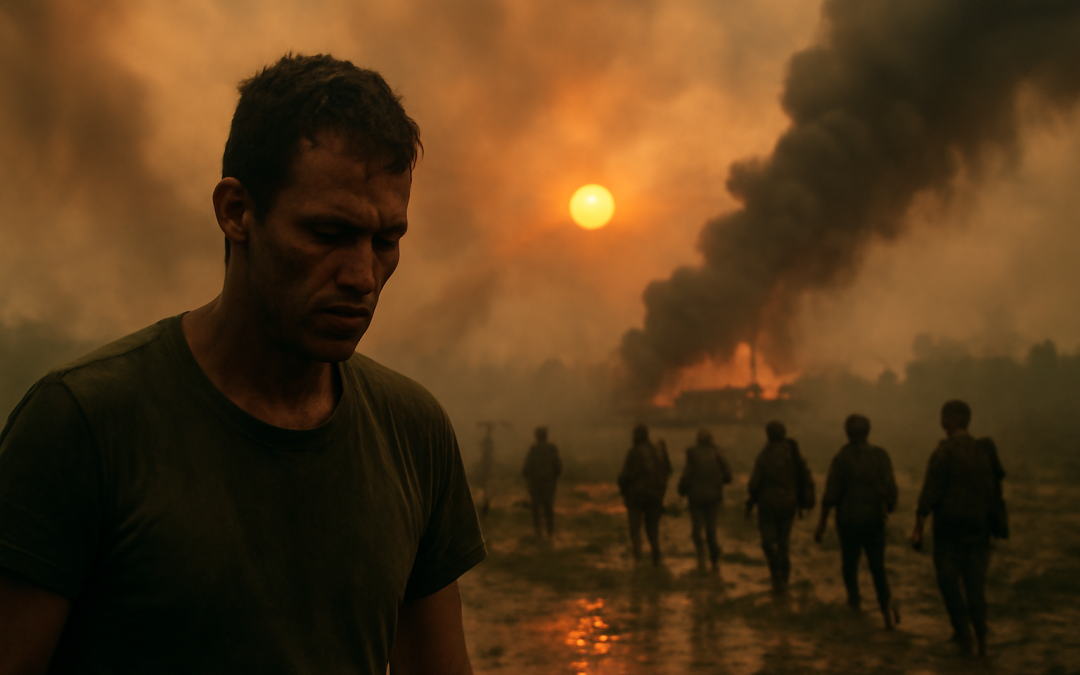
Few films have captured the unsettling chaos and moral ambiguity of war as profoundly as Francis Ford Coppola’s 1979 epic, which serves as an unflinching exploration of human nature under extreme duress. It pushes the boundaries of cinematic storytelling by peeling back layers of veneer to reveal the raw, often disturbing essence of conflict. This work transcends the conventional war movie genre through its hallucinatory narrative, intense atmosphere, and unforgettable imagery, transforming what could have been a straightforward Vietnam War tale into a harrowing journey into the darkest recesses of the soul.
Set during the Vietnam War, the story follows Captain Benjamin L. Willard, whose assignment to find and “terminate” Colonel Kurtz — a once-esteemed officer who has gone rogue — becomes a metaphor for the descent into madness and moral ambiguity that often accompanies warfare. What unfolds is less a mission and more a voyage through an increasingly surreal and menacing landscape, both physically along the winding waterways of Vietnam and psychologically within Willard himself. The film’s deliberate pacing allows viewers to absorb this transformation, immersing them in an atmosphere thick with tension and unease.
Woven tightly into the narrative is a critique of the war itself, exposing its senseless cruelty and the violence that is as much a part of the human condition as it is a consequence of political decisions. Coppola’s direction rejects glorification or heroism; instead, it evokes confusion, despair, and the brutal realization of how fragile civilization becomes in the shadow of conflict. The film’s soundscape—an eerie combination of diegetic noise and a haunting soundtrack featuring The Doors’ “The End”—amplifies this feeling of a spiraling descent. It communicates a world where boundaries blur and the distinction between sanity and madness slips away.
The cast delivers performances that are raw and mesmerizing, grounding the surreal story in deeply human emotions. Martin Sheen’s portrayal of Captain Willard is marked by quiet intensity, embodying a man who is simultaneously detached and emotionally ravaged by his mission. However, it is Marlon Brando’s portrayal of Kurtz that leaves an indelible mark. Kurtz is both a prophet and a cautionary figure—haunted, enigmatic, and a chilling representation of what happens when power and ideology become untethered from morality. His cryptic monologues and unsettling presence reveal layers of complexity that challenge our understanding of right and wrong.
Visually, the film is a masterclass in using the natural environment to reflect internal conflict. Shot in the dense jungles of the Philippines, the oppressive greenery and murky waterways create an almost claustrophobic feeling, trapping characters and viewers alike in a relentless march towards an unknown and possibly catastrophic fate. The cinematography, rich with contrasting shadows and shafts of light, underscores the theme of duality, illustrating the persistent battle between order and chaos within both the warzone and the human psyche.
One of the film’s distinctive features is its episodic structure, where the voyage up the river punctuates a series of unsettling encounters that deepen the sense of disorientation. Each stop presents a vignette that symbolizes broader themes—authority gone awry, madness masquerading as genius, and humanity’s slaughter masked as strategy. The antics of the surreal and grotesque characters they meet, such as the hedonistic surf outpost and the extravagant warlord’s compound, serve as allegories for the absurd and often contradictory nature of war itself. These episodes help to build a world where traditional moral compasses have been discarded.
Furthering the theme of descent, the film embraces ambiguity in its narrative and moral outlook. There is no clear victory or redemption; instead, the story culminates in a haunting confrontation that offers more questions than answers. This resistance to clean closure mirrors the real-world complexity of the Vietnam War and many conflicts like it, where distinctions between enemies and allies, good and evil, became muddled. The audience is left to grapple with the unsettling notions presented: that war might be a catalyst not only for destruction in the outside world but for profound psychological unraveling within those who live it.
An important aspect of the film’s lasting legacy is its reflection on the nature of power and madness. Kurtz, in his isolation, has crafted a cult-like dominion that operates both outside and above conventional military structure. This autonomy allows for a raw, unfiltered display of humanity’s potential for both creativity and cruelty. The film suggests that in the absence of societal constraints, the darker instincts of humanity can flourish unchecked. This concept forces the viewer to confront uncomfortable truths about leadership, morality, and the human capacity for violence.
In terms of cinematic influence, the film’s impact is widespread and enduring. Its pioneering use of visual and sound design to convey psychological turmoil has inspired countless filmmakers. Moreover, the film’s unapologetic exploration of war’s horrors paved the way for more nuanced and critical representations of conflict in cinema. It challenged the glossy, sanitized portrayals common in earlier decades, ushering in a wave of films that recognize the multifaceted human experiences behind geopolitical events.
The narrative is supported by an exceptional technical crew, whose efforts contribute significantly to the film’s immersive quality. The cinematographer’s use of natural light and shadow creates a palpable atmosphere, while the editor’s skillful assembly of scenes sustains a relentless tension. The sound mixing heightens auditory sensations, from the drip of water to helicopter blades whirling overhead, bringing viewers directly into the moment. The combined artistry of these elements transports audiences into a visceral experience that is as disorienting as it is hypnotic.
A poignant theme running throughout this cinematic odyssey is the struggle for identity amid dehumanizing circumstances. The characters, especially Willard and Kurtz, embody fractured psyches shaped by war’s relentless pressure. Their journey illuminates how conflict strips away social masks, exposing primal motivations and fears. The film’s narrative often blurs the distinction between legible action and fractured thought, cleverly visualizing the way traumatic experiences alter perception and behavior.
At its core, the story unpacks the idea of war as a descent—not simply into violence but into the depths of the human subconscious. This concept is executed through a kaleidoscope of images and sounds that evoke hallucination, nightmare, and myth. Coppola eschews conventional storytelling in favor of an experience that forces the viewer to confront the horror from within, rather than from a safely detached position. This approach invites reflection on the universal human capacity for destruction and the fragile nature of sanity when faced with overwhelming chaos.
The film also addresses the psychological toll of war, providing insight into the emotional deterioration wrought on those who serve. It portrays soldiers not as heroic automatons but as complex human beings pushed beyond their limits. This portrayal challenges romanticized depictions and amplifies the voices of those who have been silenced or misunderstood. The result is a narrative that is disturbing yet honest, compelling audiences to acknowledge the real costs of conflict.
In conclusion, this cinematic masterpiece is far more than a war film; it is a meditation on the human condition under siege. Its enduring power lies in its ability to unsettle and provoke, refusing to offer easy answers or comfort. By channeling the disorienting, chaotic nature of combat and the psychological unraveling it entails, the film remains a vital cultural work—one that cautions against the seductive allure of power and the thin line separating order from chaos. Through its haunting visuals, complex characters, and philosophical depth, it continues to challenge and captivate audiences, compelling them to confront the darkest corners of both history and human nature.