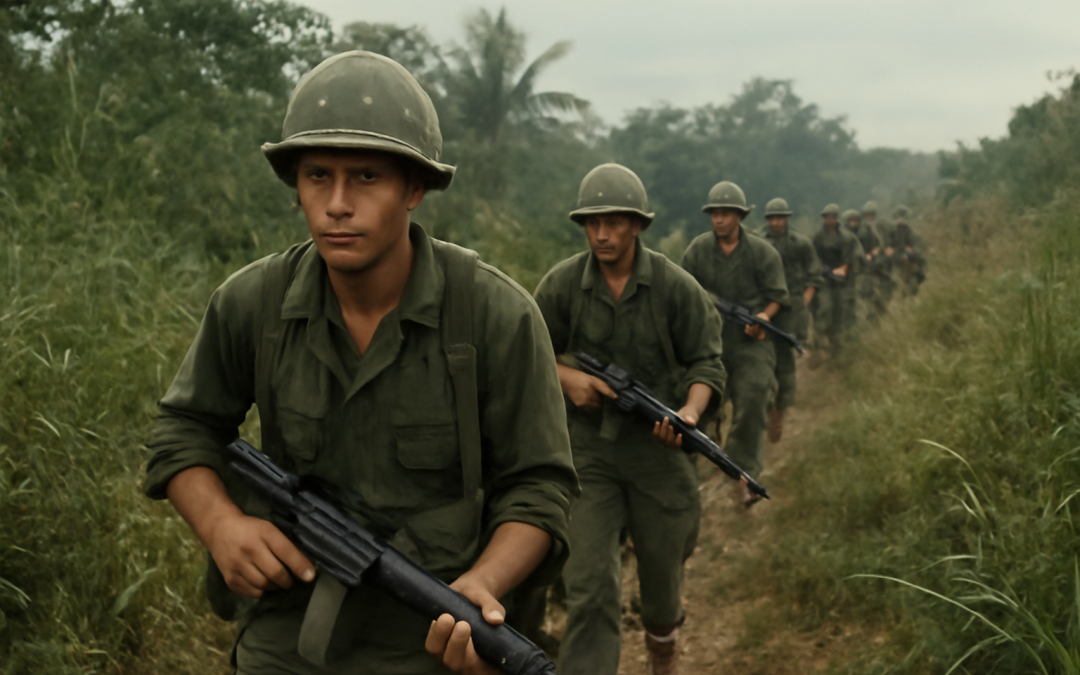
In the pantheon of war films, few tackle the complexities and brutal realities of the Vietnam War with the raw intensity and unvarnished truth that *Platoon* presents. Rather than glorifying combat or heroism, this movie confronts the grim and often harrowing nature of warfare, stripping away any romantic notions and replacing them with a stark portrayal of moral ambiguity and human frailty. It is a film that insists on looking beyond the costumes, weapons, and explosions to highlight the psychological toll and ethical contradictions faced by soldiers caught in one of America’s most divisive conflicts.
The story centers on Chris Taylor, a young and idealistic volunteer who arrives in Vietnam eager to fulfill his duty but soon finds himself consumed by the overwhelming chaos around him. The narrative progresses with a steady unraveling of innocence, underscoring not only the external threats posed by the environment and the enemy but also the internal struggles among the members of the platoon itself. Taylor’s journey from naïveté to a battle-hardened survivor becomes emblematic of the broader disillusionment experienced by many soldiers, who were often left questioning their purpose and morality in a war that seemed increasingly senseless.
What sets this film apart is its unflinching commitment to authenticity. The depiction of the jungle is suffocating and claustrophobic, the sound design immerses viewers in the distant, yet ever-present thunder of gunfire, and the camera work frequently employs shaky, intimate close-ups that make the audience feel trapped within the turmoil. The portrayal of combat is neither sanitized nor sensationalized; it is chaotic, horrifying, and arbitrary. In this, the movie succeeds in conveying a palpable sense of vulnerability, emphasizing how quickly the line between survival and demise could be crossed.
Beyond the battlefield, *Platoon* delves into the psychological warfare waged within the ranks. One of the film’s most compelling aspects is the portrayal of ideological and moral battles between the soldiers themselves, especially between the two non-commissioned officers who embody contrasting values and approaches to warfare. Sergeant Barnes represents a ruthless, pragmatic mindset, willing to do whatever it takes to win, even if it means sacrificing ethics. Meanwhile, Sergeant Elias symbolizes a more compassionate, albeit idealistic, view, which often puts him at odds with Barnes. This internal division is not just a subplot but a central theme, highlighting the complexity of human nature under extreme stress and the difficulty of maintaining integrity in such an environment.
This moral conflict within the platoon mirrors the larger national controversies surrounding the Vietnam War. The film doesn’t simply show men fighting an external enemy but also grappling with conflicting loyalties, consequences of violence, and the psychological scars inflicted by both comradeship and conflict. Through this lens, the war becomes a metaphor for the personal and ideological battles that define human experience in times of crisis. The characters’ struggles illuminate the cost of war that extends beyond physical wounds into the very soul of those involved.
Performance-wise, the ensemble cast delivers a powerhouse of nuanced portrayals. Charlie Sheen brings vulnerability and determination to the role of Taylor, capturing a broad emotional arc that resonates with anyone who has confronted disillusionment or moral ambiguity in life. Tom Berenger as Barnes conveys a chilling blend of authority and menace, crafting a character whose bravado hides deep-seated dysfunction and cruelty. Willem Dafoe’s portrayal of Elias is perhaps the emotional heart of the film, embodying a sense of idealism and humanity that anchors the story amidst the chaos. The interplay between these performances creates a rich tapestry that compels viewers to meditate on war’s impact from multiple perspectives.
One cannot overlook the film’s script, which balances moments of quiet introspection with sudden bursts of intense dialogue and action. The writing avoids melodrama, choosing instead to capture the understated interactions and tensions that define life in the platoon. Conversations reveal the soldiers’ fears, hopes, prejudices, and frustrations, often laced with dark humor or bleak resignation. This dialogue enhances the authenticity of the narrative, making the characters feel real and flawed rather than archetypal heroes or villains.
The director’s vision is palpable throughout the film. With a background of being a veteran himself, he brings an insider’s understanding that pervades every frame. His direction focuses on experiential storytelling, enabling the audience to live through the confusion and terror rather than simply observe it. The film’s pacing reflects the unpredictable rhythm of combat—periods of unbearable tension punctuated by moments of uneasy calm or bitter reflection. This approach keeps viewers engaged and emotionally invested, never allowing complacency to settle in.
Another noteworthy element is the film’s exploration of the Vietnamese landscape—not just as a backdrop but as an antagonistic force. The jungle is depicted as unforgiving and alien, contributing to soldiers’ isolation and vulnerability. It represents an omnipresent threat that is as deadly as the enemy, emphasizing how terrain played a crucial role in the war’s outcome and the soldiers’ psyche. The sensory details, from oppressive humidity to the constant buzz of insects and the visibility challenges, immerse the audience deeply into the setting.
The film also refuses to shy away from depicting the consequences of war on civilian populations. While the primary focus is on the soldiers, the interactions with Vietnamese villagers serve as stark reminders of the broader human cost beyond the battlefield. These encounters spotlight ethical dilemmas that soldiers faced, such as when combat blurred with questions of identity, loyalty, and humanity. This adds a layer of complexity to the narrative, broadening the film’s scope beyond the soldiers themselves to include the war’s inevitably tragic impact on innocents caught in the crossfire.
Interestingly, the film’s soundtrack plays a subtle yet powerful role in setting the tone. Instead of bombastic scores, the music is often sparse and melancholic, reinforcing feelings of despair, loneliness, and reflection. This restraint heightens emotional impact, avoiding manipulation and instead allowing visuals and performances to express the profound sadness underlying the story. The absence of triumphant or heroic musical cues mirrors the film’s overall aversion to glorification.
The cinematography deserves special mention as well. The interplay of light and shadow is carefully orchestrated to evoke both the oppressive nature of the jungle and the fragile moments of human connection among the men. The use of natural light accentuates the rawness of the scenes, while the framing often isolates characters within the vastness of the environment, underscoring their vulnerability and alienation. This visual language enriches the narrative, transforming the setting from mere environment to a critical player in the unfolding drama.
In examining the cultural and historical context, the film resonates as a poignant critique of the Vietnam War’s futility and the cost of misguided political decisions. It captures the zeitgeist of the late 20th century when America was grappling with its national identity and the lingering trauma of a conflict that divided its citizens. The film’s release reignited important conversations about the soldier’s experience, mental health, and the moral responsibilities of governments during wartime. Its enduring relevance can be attributed in part to its refusal to offer easy answers or simplistic heroism, instead embracing complexity and honesty.
Furthermore, the film explores themes of brotherhood and alienation simultaneously, portraying how close bonds forged in adversity can be as fragile as they are vital. The camaraderie among soldiers is depicted with nuance, showing moments of tenderness, conflict, jealousy, and loyalty. These relationships humanize the participants and underscore the paradoxes of war—that it both tears individuals apart and binds them together in shared trauma.
The portrayal of leadership, chain of command, and military bureaucracy also feeds into the film’s tapestry of realities. Superiors are depicted with a mixture of detachment, incompetence, and political expediency, adding stakes to the soldiers’ struggle for survival and moral rectitude. This aspect critiques not just combat but the institutional frameworks that can perpetuate suffering and confusion on the ground. The film thereby becomes a broader reflection on authority and responsibility in extreme situations.
Critically, the film has been celebrated for its courage in confronting uncomfortable truths. It avoids the temptation to absolve or justify the war and instead holds a mirror to society’s complicity and indifference. This candid examination lends the story its emotional power and intellectual weight. The film’s refusal to sugarcoat the soldiers’ predicament results in a gripping and ultimately sobering experience that lingers long after the credits roll.
Overall, this cinematic work functions as a profound exploration of the Vietnam War through the eyes of those who lived it, devoid of glamor or patriotic mythmaking. It effectively conveys the physical and psychological destruction wrought by war, while also probing the ethical dilemmas and interpersonal conflicts that arose in such extreme circumstances. The film’s nuanced portrayal encourages reflection on the price of conflict, not just in terms of lives lost but also the lasting scars borne by survivors and society at large.
Such a film is essential viewing for anyone seeking a deeper understanding of the Vietnam War beyond textbooks and newsreels. It achieves this not through spectacle but by humanizing the individuals caught in the machinery of war, giving voice to the complexities and contradictions that defined their experience. The emotional honesty and artistic integrity embedded throughout make it a timeless testimony to the human cost of conflict, serving both as a haunting cautionary tale and a tribute to those who endured.
In sum, the film presents Vietnam without glory—stripped of bravado and nationalism, narrating instead a somber story of survival, ethical struggle, and the profound, often devastating impact of war on the human spirit. It challenges viewers to confront uncomfortable realities and to remember the true costs behind headlines and history books. By doing so, it ensures that the voices of those who fought and suffered in Vietnam continue to be heard with clarity and respect.