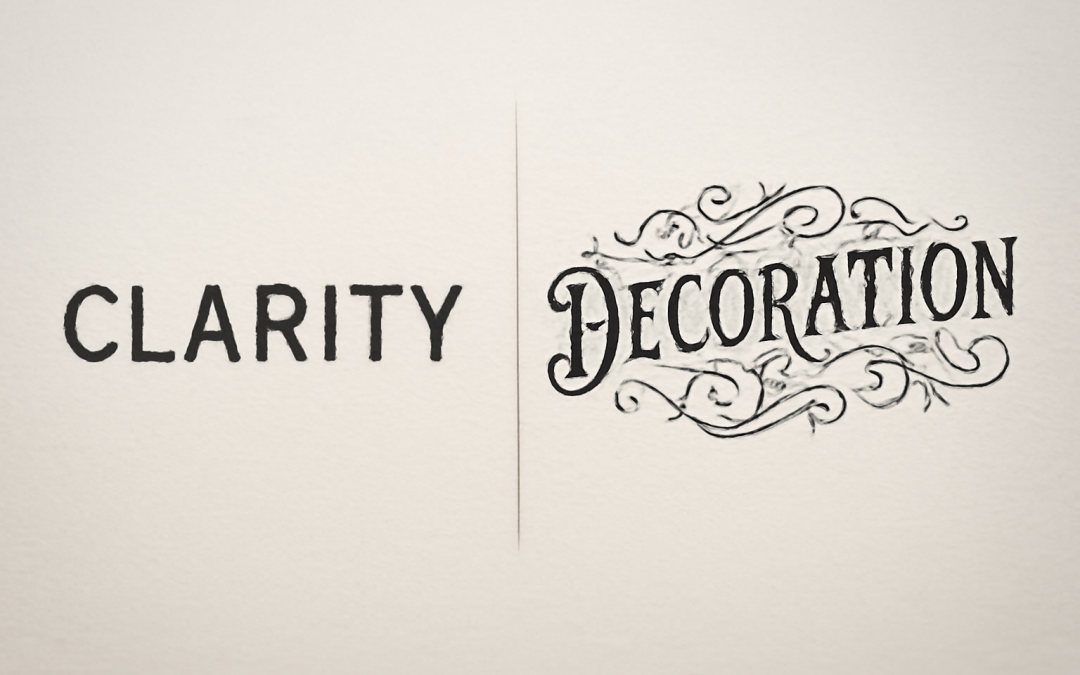
In the realm of communication and design, the balance between clarity and decoration often dictates the effectiveness of a message or the success of an aesthetic presentation. At the core, clarity refers to the straightforwardness and precision with which information is conveyed, ensuring that readers or viewers can easily grasp the intended meaning. Decoration, by contrast, involves embellishments, stylistic elements, and creative flourishes that enhance visual appeal or emotional impact but can sometimes complicate or dilute the message. The interplay between these two concepts presents a fundamental challenge: how to maintain clear communication while embracing artistry and expression.
Clarity is essential because it serves the primary purpose of communication—to transfer ideas, instructions, or information from one party to another without confusion or misunderstanding. When clarity is prioritized, the audience’s cognitive load is minimized, allowing them to quickly process and internalize the material. This is particularly critical in fields such as education, technical writing, and advertising, where any misinterpretation can lead to incorrect actions or decisions. Clear communication functions like a well-lit path, guiding the audience through complex ideas or instructions without distractions or ambiguity.
However, an exclusive focus on clarity can sometimes render communication sterile and uninspiring. Purely functional messages that lack personality or emotional resonance may fail to capture attention or motivate engagement. This is where decoration finds its purpose. Through the use of color, typography, imagery, rhythm, and other aesthetic devices, decoration enriches content, evokes emotions, and can strengthen brand identity or narrative voice. Decoration serves to captivate and hold the audience’s interest, creating a memorable experience that resonates beyond the initial encounter.
The tension arises when decoration overshadows clarity. Overly ornate designs, verbose language, or excessive embellishments can obscure the main message, forcing the audience to exert undue effort to decipher the intended meaning. This not only frustrates recipients but also undermines the communication’s effectiveness. In visual media, cluttered layouts or distracting graphics can mislead or confuse viewers. In text, long-winded sentences and flowery phrases might overshadow critical points. Therefore, while decoration can be a powerful tool, it must be wielded judiciously to avoid compromising clarity.
Context plays a crucial role in determining the appropriate balance between clarity and decoration. Different audiences and mediums call for varying degrees of each. For instance, in emergency information pamphlets, clarity is paramount; decoration must be minimal to ensure rapid comprehension. Conversely, in a high-fashion magazine or an art exhibition catalog, decoration is often a priority, and the audience may welcome or expect a more elaborate, visually stimulating presentation. Understanding the audience’s needs, expectations, and purpose can guide the decision-making process, ensuring that decoration enhances rather than detracts from clarity.
In the digital age, this balance takes on additional significance. Websites, apps, and social media platforms constantly compete for user attention, often resorting to decorative elements such as animations, vibrant colors, and interactive features. While these can increase user engagement, they also risk slowing down load times or creating navigation challenges. User experience design stresses the principle of clarity to ensure users find what they need effortlessly, but aesthetic appeal remains vital for pleasing users and differentiating brands. Successful digital design harmonizes clarity and decoration by using visual hierarchy, whitespace, and consistent design language to maintain order amid creativity.
Writing, too, demands careful consideration of clarity versus decoration. Journalistic pieces prioritize clarity to report facts succinctly and objectively. Creative writing may lean heavily on decoration to convey mood and imagination through metaphors, vivid descriptions, and complex sentence structures. Nonetheless, even in literature, the most celebrated authors balance decoration with clarity to engage readers without losing them to unnecessarily complicated prose. Skilled writers know how to decorate their narratives with enough stylistic flair to captivate while preserving accessibility.
Another dimension where this tension unfolds is in public speaking and presentations. Clear articulation, structured arguments, and concise messaging are fundamental to effective speeches. Yet, decorative storytelling, humor, visual aids, or dramatic pauses can elevate a presentation, making it more persuasive and memorable. Too much decoration may reduce the speaker’s credibility or distract from key points, while too little might result in a dry delivery that fails to inspire. Balancing substance and style is vital to maximize impact.
The concept of clarity versus decoration is not merely about choosing one over the other; it is about integration and purpose-driven decision-making. Effective communicators understand that decoration should serve clarity, amplifying the message rather than obscuring it. Decoration that aligns with content and audience expectations can create richer, more engaging experiences. The most successful designs and messages often marry clarity and decoration in ways that feel seamless and natural rather than forced or excessive.
Training and experience can enhance one’s ability to navigate this balance. Designers learn to employ principles such as contrast, alignment, and proximity to enhance clarity while adding decorative touches that appeal aesthetically. Writers study rhetoric and style to develop voices that captivate without confusing. Marketers analyze audience data to craft messages that are both clear and emotionally engaging. Through such knowledge and practice, professionals can push creative boundaries without sacrificing communicative precision.
In education, teaching students and professionals to appreciate and apply the balance between clarity and decoration is crucial. This involves developing skills in critical thinking, visual literacy, and effective communication. Evaluating examples of both good and poor practices in various media helps learners recognize when decoration enhances or hinders clarity. Experimentation and feedback foster a nuanced understanding that clarity and decoration are complementary, not opposing, facets of impactful communication.
Culturally, attitudes toward clarity and decoration vary widely, which adds complexity for global communicators. Some cultures value directness and simplicity, associating these traits with honesty and respect, while others embrace elaborate storytelling and metaphor-rich communication styles as signs of sophistication or warmth. Multinational organizations and content creators must research and adapt to these preferences, ensuring that their communication strategies neither confuse nor alienate their target audiences.
Technology tools can aid the pursuit of this balance but can also tempt creators to overdecorate. Templates, filters, and automated design features may encourage excessive embellishments by making them easily accessible. Conversely, readability checkers and usability testing software help ensure clarity remains intact. It is thus important for creators to retain critical judgement and purpose-driven intent rather than relying solely on technology.
Ultimately, the pursuit of clarity over decoration—or vice versa—is never absolute. Communication is an art and a science, requiring an ongoing negotiation between precision and creativity. The best communicators know when to strip away excess to reveal pure insight and when to layer on decoration to enrich perception and emotional connection. They view clarity and decoration not as adversaries but collaborators in crafting messages that resonate, inform, and inspire.
In summary, successful communication hinges on a thoughtful balance that respects the imperative of clarity while embracing the power of decoration to engage and delight. This balance varies with context, audience, and medium but always requires deliberate choices grounded in the goal of effective understanding. By mastering this interplay, communicators and creators can produce work that is not only intelligible but also compelling, transforming mere information into meaningful experience.